

‘And everybody knows that the Plague is coming
Everybody knows that it’s moving fast
Everybody knows that the naked man and woman
Are just a shining artifact of the past…’
Leonard Cohen
I started writing this piece in early April 2020 when the world was shutting down, when we didn’t know what was to come…
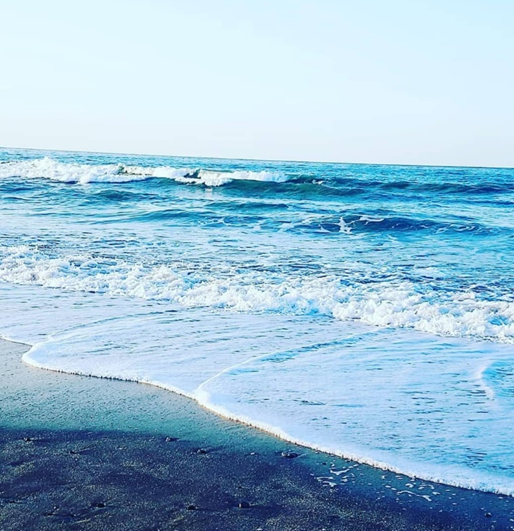
I was living in Muscat, Oman. Already a fish out of water when the city of A roads and no discernible centre went silent. Only the waves crashing against Azaiba Beach seemed to soothe the sense of emptiness around.
I want to honour that time because perhaps it is only now, three years back into my life in the UK that I can look back…and breathe.
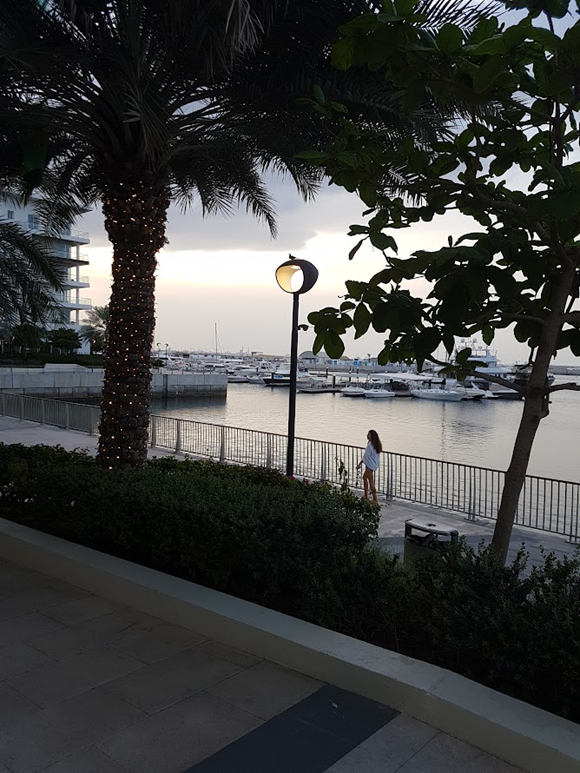
The speakers at the centre of The Wave’s commercial zone in Muscat are still playing music – or muzak – to accompany shoppers and strollers, cafe loungers, as they enjoy the last of the evening sun. But there are no ears here to listen, or almost none. And the screens which line the boardwalk next to the Marina, showing chefs at work, families eating in restaurants – restful candy for the leisured eye – are testament to another time, when walking freely is not privilege, but norm.
I’m reminded of camping as a child, and that time before dusk, when people parade the dusty campsite avenues having showered after a day at the beach, relaxing in the evening light, as they smile or nod hello. Because everybody’s part of something bigger. We share the same air.
And everybody knows.
But what exactly did we know in the streets of The Wave, Muscat at 5.45pm on a weekday evening in April 2020? What could we discern of the months of restriction yet to come?
That afternoon, I set out on my daily walk – by car. In this sense, Muscat is like L.A; you have to drive the endless freeways to find signs of life, and even then, the city exists in isolated pockets: Azaiba, MQ. The Wave – societal limbs on a body without an obvious heart.
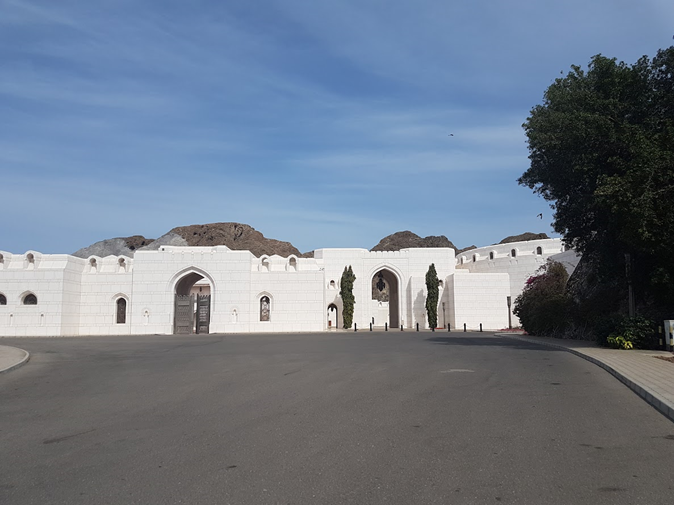
When I first moved there, I searched diligently for a community hub, the cultural centres, museums and coffee shops – which did exist, but in a disparate way. After 8 years in Oman, I eventually resigned myself to the truism of Gulf Arab life; the extended family IS the community (And its setting? Cool palatial homes with sitting rooms so spacious you might lose yourself or others among the beige and fawn, the Persian rugs, the semi-see through blinds). In Oman, external social infrastructure is still but a sketch on the city’s rugged landscape.
Earlier that evening, in 2020, my usual choice to stroll – Muscat Hills Golf Course – isn’t letting people in. A couple of kilometres down the road, the beach at Azaiba is manned with police officers who politely tell me that the sand and the sea are off limits.
I turn the car around and wonder: In normal times, where exactly was the busiest part of this city? The place where everybody congregates. And I picture the cafes and shops burbling with life at The Wave, a nearby housing and commercial district. And I reason: Even if all its locales are closed, because The Wave is also a public zone full of villas and apartment blocks, then nobody can shut it down.
So I drive straight there and find there’s almost no one thronging its sidewalks apart from a few children let out of the cage of an apartment, calling up into the fast-fading light. Behind them, employed adults are cajoling; they too are taking in the air.
Before covid hit, trying to practice my limited Arabic with the supermarket cashier, I was reminded of the Jamaican slogan, No Problem! which became universal in the 1980s.
Oman is truly the Jamaica of the Gulf. Its population, as small as an island’s, is intricately linked via relaxed social custom. Strangers ask of your health, your family’s health, their calm politeness is a balm, any inconvenience in this country relieved by the chilledness of its folk.
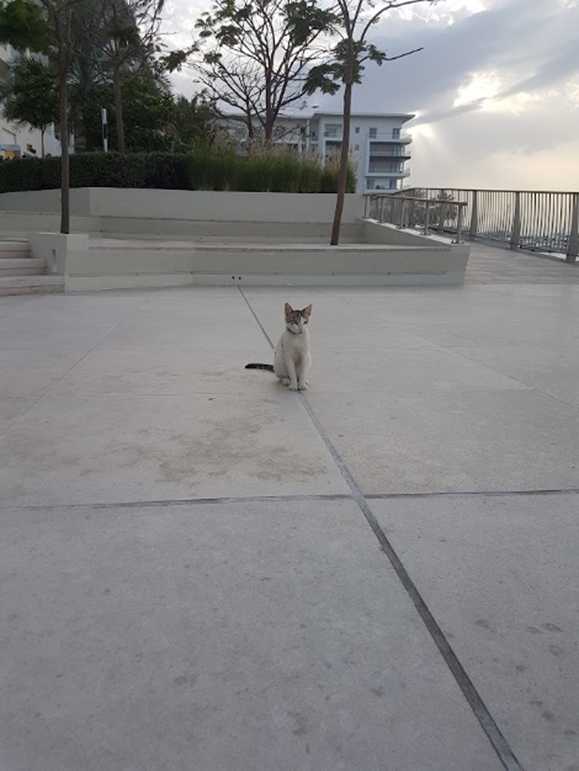
But the only community to be found on the streets of The Wave that evening in April 2020 are cats. They dot the paving like dancers on a near empty stage. Tame ones with ribboned neckpieces. Feral ones the colour of sand. With the sea to my left, I skirt the boardwalk, weaving around their nonchalant poses. I make a poem in my mind, unaware that this temporary silence may take the best part of two years to break.
And then, within a month, everybody knows.
We mask up. Dettol spray becomes our welcome home. In Oman, my life pre-covid had been quiet. Soon I became like a lone vessel floating on the Arabian sea.
A few weeks in, my then husband was called to Germany for an urgent family matter. He spent weeks there with no end in sight.
And I was left, for the first time in my life, socially distancing in a flat in a foreign land. Entirely alone. For several months I had been writing – the peace in Oman had been an ideal backdrop for the work – but now, the silence seemed to warn.
One day, visiting an acupuncturist, the rickety lift to the top floor abruptly jammed. As I waited, static, between levels, I pressed the alarm button, and thought: What if nobody comes?
Who will even know I was there?
Later that week, doing yoga in our living room, I was jolted out of a pose by a face staring through a window at me from across the apartment blocks. Suddenly seen – unknowingly – fear rose in my throat. Not from the sudden visibility, but the sense of being an object to observe that alarmed. I was peripheral to the world – an extra; no longer contributing to this great human scheme.
As the months trudged on, the uniqueness of that particular spring and then the summer appeared to become a time when pretty much the whole world was holding the same thought – a sudden unity of mind.
Everybody knows.
News reports: Daily acts of bravery: the willingness to help. For once, we weren’t each other’s enemies. We might have been each other’s only hope. And, of course, the cost to our world: Chronic uncertainty. Daily loss. Distancing, shielding…
And then, within a few months – it seemed – fast on their heels came the vaccine. Astonishing, the speed of it – our rope to normal life again.
During those pandemic days, in Muscat, I felt my mind empty the same way as the streets. As though every synapse, formerly nurtured by daily interaction, could no longer quite reach the next. I stopped wanting to eat. I couldn’t read. When a single line of poetry touched me, I wept without end, relieved to be one of the living.
There is often talk of an epidemic of loneliness, but before 2020 I’d always enjoyed my alone time. This was different though. That fall, I joined an online short story writing workshop where the tutor suggested that as a way of writing into character, we might each look inside our personal handbag and delineate its contents on the page.
But like my mind at the time, I guess – or my life in 2020 – the mini leather holdall sitting in the hall of our Muscat apartment contained practically nothing at all. Why should it? There was nowhere I needed to be.
I remember thinking, that afternoon: What does it even mean to have a full life? And when I eventually logged off, I stared for an hour at the screen.
In 2022, flight restrictions lifted, I finally returned to my hometown in the UK, and on another media platform, I posted this:

The joy of returning to Cambridge wasn’t just about old friends and family ties, the greenness of the parks and the familiar sounds from the broad East Anglian skies. When the world woke back up again, I sensed a softening. We had all felt the tug of mortality, the veil between the living and the dead shift far nearer to our personal experience of daily life than many had known before.
How are you? people began to ask in shops, and then they really listened for the reply.
It took time for us to learn to stand at a normal distance from each other again, to not flinch at another person’s sneeze, but slowly we did.

The notion that behind closed doors others’ lives weren’t as perfect as social media might claim became an accepted reality. We had all, after all, watched the BBC newscaster’s home interview three years before, suddenly interrupted by his kids wandering confidently in front of the camera, into the room. And in that moment, we had met his humanity.
Perhaps over the long months of drying masks, of sanitised hands, and enforced distance, a time when we were forced to live online and see right into other people’s homes, we had begun to accept each other better for it.
Did the pandemic return us to ourselves? To the ‘soft animal’ of Mary Oliver’s poem Wild Geese? Looking around the world at recent events, this notion might be a bridge too far, but when I returned to the local cafes, the museums and bookshops of my town, in 2022, back to my job in a local school, I did perceive a shift.
Workplaces have become – by necessity – more flexible. There is hybrid working. The resource of a ‘mental health day’ if you’re feeling out of sorts. Are people kinder? Is the extension of grace becoming part of the vernacular?
I began this blogpost with a snippet of Leonard Cohen’s lyric: ‘Everybody knows.’ And the description of a pandemic, devastating and enjoining, like a time of war, or a natural crisis on the earth.
Everybody has known. It cannot be unknown. This is what I have been left with. There is strength in communally surviving adversity. We have walked through it; and it has shaped us.
If you enjoyed this post feel free to get in touch via Twitter here , and you can follow this blog by going here and clicking on ‘Follow Muscat Tales.’
 Muscat Tales
This is so beautiful, thoughtful and moving and takes me right back to this time. I love the perspective of seeing the pandemic as a communal softening. This was food for the soul today. Thank you, Josephine.
LikeLiked by 1 person
Thank you, dear Shelley. That means a lot!
LikeLike