You must go on, I can’t go on, I’ll go on: Review of Sally Rooney’s novel, Intermezzo

I’d last read Rooney at the start of the pandemic. But then I heard the author read an extract of her new novel, Intermezzo, on the New Yorker Fiction Podcast in the summer, (you can listen here), when two of the protagonists meet at a chess tournament, and I experienced something quite different. A thrilling moment, both tender and absurdist. Intermezzo already felt like a departure …

In this new work, Sally Rooney writes in a style not present in Normal People. It’s more reminiscent of a Samuel Beckett short story – terse and internalized, and like Beckett’s prose, it packs an emotional punch.

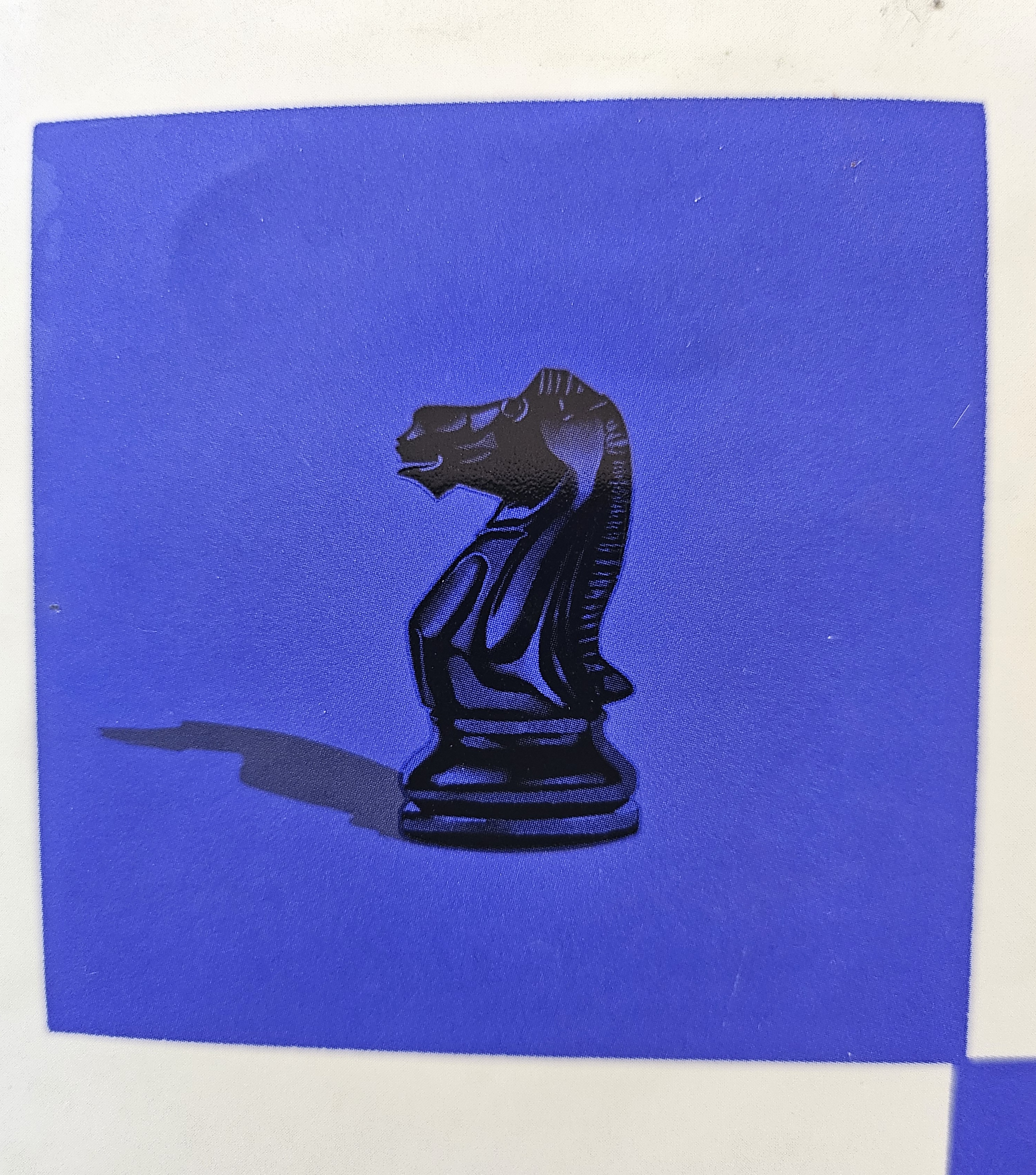
We sit inside the mind of Peter Koubek and sometimes too, the brain of his brother, Ivan. Peter, a barrister, calls the younger Ivan, a chess ‘genius.’ The latter finds his advocate older sibling ‘condescending.’ Sally Rooney moves these two pieces deftly across the plot of Intermezzo as they navigate the taking of a king – the loss of their father.

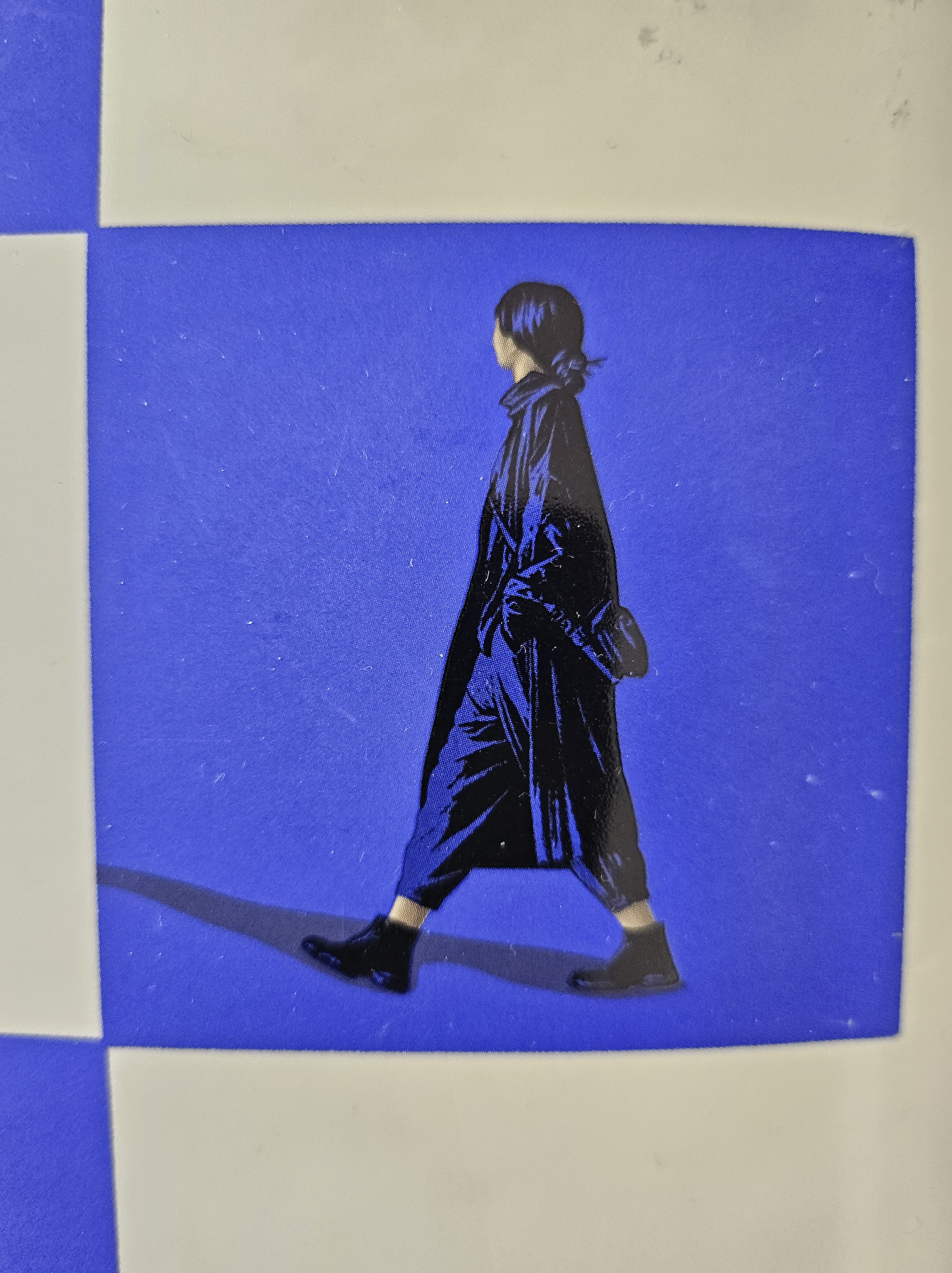
The desires of the three women in the book we meet mainly through their acts and words. Most skillfully drawn among the quintet of characters is Margaret, a person so sympathetic that her interaction with one of the two men towards the end of the novel felt like the kindest conversation I’d read or seen in years. 22 year old, Naomi, another player on the board, seemed less substantial, but perhaps this is part of her style.

Where Sally Rooney’s writing really flies is in her ability to capture the interplay of live action and a character’s stream of perception. We see fragments of the outer world: a door swinging open, the banter in a pub, and like shards of light on a cubist painting, these outer images are illuminated by the inner worlds of our five. And how rich with feeling these inner worlds. Such delicate humanity in Rooney’s prose.
There is complexity, too, in Peter’s relationship with his ex/not ex Sylvia which feels intriguing and real. Indeed, all of the relationships in the novel which start awkwardly – intentionally so, it seems – develop a rhythm that is captivating to follow, playing out in satisfying sequences, and punctuated by deep philosophical turns that never feel forced.

My favourite of these was a riff on the thinker, Susan Sontag’s aphorism:

‘In place of a hermeneutics we need an erotics of art’*

that Rooney made into:

‘We need an erotics of environmentalism’

(which frankly, as original thought goes, (in this writer’s opinion), sails quite close to the ‘genius’ she ascribes to her chess-playing protagonist!)

I could write at length about the lightness of Rooney’s painterly descriptions of Dublin that hint at enough of an outline for the city to be seen, or the way the author shifts her characters within and around their relationships making us both root for them and want to give them a sound talking to (!) when, (for example – again in the style of Samuel Beckett) – they fail to hear one another or themselves. But it might be better if you read Intermezzo for yourself.

During the pandemic, (like some others, I heard), I found books challenging to stick with. The period itself was bizarre enough, when the very atmosphere of the world seemed to infiltrate my consciousness pulling me away from the immersion of reading. The flicker of the phone screen, social media’s bitesized claims; trying to figure out what to do in a country whose wilderness was its usp (but whose police would no longer let us wander there), all acted on my ability to simply sit down and read.

One great thing the covid crisis brought to the fore, though, and which Rooney does so well in this novel too, is explode the myth that other people have it all figured out. In both scenarios we are given the chance to see the human mess behind closed doors and to soften towards each other all the better for it.

Intermezzo is the first novel I have read since covid that has captured me completely. Enough to put away my phone. To take time to savour its language. Enough to truly care.

The very last lines of the book are what brought the title of this blogpost to mind. Through the character of Peter, Rooney’s lines evoke the mid century author and dramatist, Samuel Beckett’s trademark resolve, through his tramps in Godot, and in The Unnamable when he writes:

‘You must go on, I can’t go on, I’ll go on’

The phrasing of the final line in Rooney’s novel mirrors these words – it is so Beckett, I was at first surprised that his name didn’t feature in Rooney’s afterword (which details other writers’ words or ideas she has drawn on for this novel). But so suffused is Beckett’s sensibility throughout Intermezzo that perhaps his mention would be superfluous; the thanking is in the honouring.

Grief has met me personally this year. Intermezzo, itself a work that handles loss, has been a warm hug, a friend who draws on the ‘genius’ of masters for their solace, an engaging confidante, fresh air.

In brief, I think it’s a masterpiece.
*From Susan Sontag’s essay, ‘Against Interpretation’ (1964)

I review crime novels, contemporary fiction and nonfiction. If you enjoyed this post feel free to get in touch via social media here , and you can follow this blog by going here and clicking on ‘Follow Muscat Tales.’  Or leave a comment below… 🙂
Book Review: What Doesn’t Kill You: Fifteen Stories of Survival

wp-1591097579901.jpg

‘What Doesn’t Kill You,’ is an anthology of short stories and a couple of philosophical essays centred on a single theme: adversity.

Its contributors are authors, journalists and figures from the British media, and the topics it covers are broad.

I enjoyed reading ‘What Doesn’t Kill You,’ for a number of reasons but not for the ones I was expecting. If you love – as I do – to leaf through the overcoming of hardship – the long-earned joyful walk to all kinds of personal victories – then this may not be the book for you.

This anthology, travels, instead – to borrow a term from Pilgrim’s Progress – to a series of ‘sloughs of despond,’ personal difficulties which its writers have experienced and then invites us to take a look around. This may sound bleak – and many of the tales here are predictably dark – but there is also something deeply connecting in reading of another person’s ‘Struggle’, ‘Self’ and ‘Striving’ (the titles of each section of this anthology) without necessarily learning of their happy ending.

Indeed, despite the occasional musings on personal transformation and some beautiful philosophical insights (the elliptical title is borrowed from Nietzsche), this anthology could not be classed as ‘uplift lit.’ Healing, or even transcendence of past pain is not the focus of this collection.

This said, the writing (and editing by Elitsa Dermendzhiyska) is fabulous. There are breathtaking lines to take away – language which takes us closer to what it feels like when life’s sharpness moves us to the edge.

The exquisite surrealism of Irenosen Okojie’s ‘Three Wise Women’ is a huge treat:

‘I sat in train carriages watching for a far-flung white calla lily to manifest from a rip in a seat.’

Okojie’s storytelling is utterly compelling – poetic and precise – and her descriptions of ‘winter’ searing in the way which they evoke the alienation of an anxious mind.

Alex Christophi’s piece, which is both of the mind and rooted in the flesh, takes us through the recreation of memory and its accompanying thoughts. His words on coming back to present stillness are arresting:

‘…when they finally stop running, they can actually feel the world spinning.’

The meditations on ‘disappearance’ which appeared throughout this anthology were also a thrill to read:

In Ed Mitchell’s story of alcohol addiction, ‘Not Wasted’ where he describes how he went from an affluent lifestyle as a television presenter to living on the streets of Hove, he writes:

‘I disappeared for a year: a sea front ghost.’

‘A Disappearing Act’ by Kate Leaver is a moving account of overcoming an eating disorder, clear-sighted on what it meant to withdraw from ‘the act of living my life’. She writes:

‘It was my best effort to vanish.’

And I particularly liked Hazel Gale’s exploration of leaving one’s own body in ‘The Last Fight’. Her disappearance (and later re-appearance) in her own physical reality, is the story of reclaiming her personhood:

‘What I’d been calling the Self was forged solely of what I thought was required of me by the Other.’

Memory’s disappearance is acutely studied in Emily Reynold’s ‘My Unremembered Life’:

‘Trauma simultaneously erases memory and rewrites it,’

while Elitsa Dermendzhiyska’s tale of using economic theory to try to make uncertainty vanish from her daily life, lured by the ‘promise of an underlying order’ contains great beauty in its truth and vulnerability.

wp-1591097941271.jpg

Peppered throughout this collection are nuggets of inspiration, on our personal agency in not just surviving adversity, but the ways in which we might exist in its wake:

‘If I don’t want to go back to prison,’ writes Cathy Rentzenbrink, on tending to herself sensitively in recovery from PTSD, ‘I have to make sure I keep the conditions of my bail.’ and for each of these writers – and for many of us – this keeping out of the ‘prison’ of self-protective suffering might look quite different.

Ben Saunders explores the futility of ‘striving’ in the last section of the anthology, through his piece ‘A Very Long Walk in a Very Cold Place.’ His is a gripping real-life adventure to the North Pole full of grit and grimness, where the true prize cannot be gained externally.

Nature is also at the forefront of A.J. Ashworth’s ‘Eight.’ Facts and images of the sun weave beguilingly through this powerful account of living with panic attacks.

The stories in ‘What Doesn’t Kill You’ neither sugarcoat nor glamourize the difficulties encountered by its authors. There is courage in these very personal tales, many as raw as the pain they’ve endured.

Rory Bremner’s essay is a beautiful description of living life with ADHD, both sensible in its advice to those experiencing similar, and celebratory of the wealth of expression he feels the condition has brought him. His refusal to see ADHD as a problem, instead as a part of himself to be loved, is key to the way that he chooses to live.

In his essay ‘No Cure For Life,’ Julian Baggini takes a characteristically rationalist approach to suffering, shunning the notion of the ‘happy ending’ sold to us by self-help evangelists. He observes the uneven way in which life’s slings and arrows appear to be handed out, and seems to underscore some of the thoughts of M. Scott Peck in his seminal book, The Road Less Travelled:

‘Life is difficult. This is a great truth, one of the greatest truths.’

However in Peck’s book he goes on to say:

‘It is a great truth because once we truly see this truth, we transcend it.’

While ‘What Doesn’t Kill You’ isn’t generally about transcending the adversity it portrays – it reads more as a panorama of lived experience – the gems contained within make it well-worth a look.

I loved the style of Lily Bailey’s ‘The Lily Show’ and found her stream of consciousness sentences a brilliant vehicle into the hellish reality she employs to keep her safe.

‘Maybe…they’ll smash through the set walls and rescue me..’

This is as real an account of mental illness and its attendant isolation that I have ever read.

But what I loved most about ‘What Doesn’t Kill You’ is that it points to other books as safe crossings and scaffolds when life gets tricky. There are some great book recommendations here – from JD Salinger to Clarissa Pinkola Estés – so many of the writers in this anthology finding solace in the printed page.

It has indeed been my own experience that there is a deep hopefulness in the occupation of reading – in seeing the story of another played out and repurposed purely for our benefit – which can be like a hand-hold through life’s sometime rough terrain.

‘Reading was, as ever, an ally in taking my mind away from itself,’

writes Cathy Rentzenbrink.

And it is this which makes ‘What Doesn’t Kill You’, a valuable book shelf addition; each of these 15 pieces – while simultaneously distracting us – draws us closer to our own humanity, especially in this time of societal introspection.

It is always hard to believe that the courageous step is so close to us,’ writes David Whyte at the start of the anthology, and in celebrating the beauty and plurality of each of these writers’ challenging life experiences, ‘What Doesn’t Kill You’ empowers us to find our own possible steps when life feels like a struggle.

What Doesn’t Kill You is published by Unbound, available to purchase here (among other outlets) from 11th June 2020.

I review books I’ve loved. All views expressed in my posts are my own. This blog is not affiliated to any other individual, company or advertisement.

Please note – I am currently reviewing selected books whose launches have been affected by the current Corona virus outbreak. If you are an author or publisher please feel free to get in touch (see below) if this is of interest.

If you’d like to email me, please visit my contact page, here.

Your comments as always are welcome…

Out of Touch: Book Review

window

Thank you to Net Galley for sending me an Advance Reader Copy. Note to readers: there are details from the novel mentioned in this review but (hopefully) no plot spoilers!

Out of Touch by Haleh Agar is a soulful story about two siblings, Ava and Michael, and the ways in which they try to make sense of their family’s past.

Michael lives in New York. Ava, England. And as their current lives unfold we are given glimpses of the way things were between their parents when Ava and Michael were growing up.

Towards the end of the novel, their father, Lee asks ‘What do good families do?’  and it is this uncertainty, this search for a happier future to eclipse a tricky history which seems to fuel both brother and sister in their daily lives.

Earlier in the story, a request is sent by Lee to see both his adult children urgently. As readers we are intrigued to discover how this part of the tale will develop.

The scenes in New York where Michael lives with his partner and son are vividly told, ‘everything in mason jars’ and with a straightforward realism which is compelling and enjoyable to read.

And the appearance of an artist neighbour who is able to see into Michael’s apartment adds an interesting dimension – a twist on the idea of the male gaze – for as she watches him and his young family go about their daily life, it is the female gaze making Michael conscious of his actions, affecting the choices that he makes.

Out of Touch is well paced and yet there is a captivating stillness to its prose, an acute sensuality reminding me of the film, ‘Yes’, by Sally Potter which also looks at shattered family dynamics and cultural crossings.

The international angle is delightfully told, not just through the dual scenes set in the U.S and UK but via the backgrounds of the characters themselves — Lebanese, Greek Cypriot and Iranian. Culturally-specific details add texture to our understanding of the main characters and a liveliness to their histories.

There is much depth portrayed in this novel but also a pleasing lightness to the writer’s style which makes it a book which is hard to put down (I read it in two sittings and I’m generally not a fast reader!)

It was refreshing to read how the twin taboos of physical and emotional pain are tackled and the myriad ways in which humans try to face or avoid them.

When something frightening happens to shake Michael and his partner’s family life in New York, his partner Layla responds by becoming overly cautious, taking a hammer on car journeys in case of an accident, deciding to try to become the ‘God’ of the family by checking everything she can. Layla’s anxiety which seems to stem from a disconnection from the nominal faith of her childhood is insightfully handled through the narrative.

While the difficult legacy of Michael and Ava’s mother, Elena, is portrayed in detail there is also space for complexity in our understanding of her. And it is this grappling with the dynamics of family and the way characters try to overcome their histories through new choices that this book is at its most captivating. We are given a window not only into the pain of the past but also the ways in which repair may occur in the present.

The love story at the centre of the novel plays out beautifully. Sam is earnest and believable, Ava wavering and confused until she has to make a decision either way.

There is something warm and life-affirming and ultimately important about the way human difficulties are addressed in this book. I was left at the end with the sense, as a reader, of being seen. The existential questions the characters face – whether it’s possible to make peace with the past (can old disagreements be mended?) and why a look at what happened long ago might shed light on our present responses – feel universal and timely.

I look forward to reading more from Haleh Agar.

Out of Touch is published by Orion, available to purchase from April 2nd 2020. 

I review books I’ve loved. All views expressed in my posts are my own. This blog is not affiliated to any other individual, company or advertisement.

Please note – I am currently reviewing selected books whose launches have been affected by the current Corona virus outbreak. If you are an author or publisher please feel free to get in touch (see below) if this is of interest.

If you’d like to get in touch, please visit my contact page, here.

Your comments as always are welcome…

The Confessions of Frannie Langton : Book review

house 2

(SPOILER ALERT… Contains some references to plot)

It’s been more than 2 years since my last blogpost… Reader, where has the time flown?

I’ve been working on a novel and was planning to return to this page in the new year, but I must confess I missed the buzz of blogging…

A character from fiction grabbed my attention. It was Frannie, heroine of Sara Collins’ debut novel, The Confessions of Frannie Langton. 

A few weeks ago, as reviews filled the Twittersphere and The Confessions of Frannie Langton was ‘Book of the Month’, I was approached by a Waterstones bookseller saying he doesn’t usually read novels but…

‘Try this,’ he urged, holding the paperback pictured below.

I took his advice and bought it.

Frannie

The premise? A grand Victorian house in 19th century London, a young woman sent to work there from Jamaica, and the accusation of a crime, the double murder of her bosses, for which she may hang.

As she awaits her trial, Frannie gives an account of what actually happened before she was imprisoned. She hopes to set the record straight, taking us through a life spent resisting the servitude into which she was born.

At the centre of the intrigue is the love between the servant Frannie and her mistress, Marguerite, a French ‘eccentric’.

‘Knowing a person’s story, and how they tell it, and where the lies are in it, is part of love.’

And in each of their interactions, as in the rest of the novel, Frannie is determined to be treated as equal, in a household – and world – set on keeping her in her place. Her courage is the engine which keeps the pages of this mystery turning.

There are court testimonies by other dwellers of the house. Not just the masters but the staff too. We meet them in the kitchen and peek at the food that they prepare:

‘…the room was musty and dim, and still reeked of salt and old mutton fat. The cake made up for it. Golden and sweet, and no matter that I knew only too well how the sugar was made.’

Like the hit TV series Downton Abbey, exchanges between the servants are as central to the story as those of the family, but no cosy historical is this. Imagine characters, with grins and bones protruding, a little larger than life, and you get the idea. Much of The Confessions of Frannie Langton is decidedly gothic.

Frankenstein 2

We also see snippets of a journal written by Benham, one half of the murdered couple. This adds to our picture of Frannie, a forthright mix of bookishness and protest at her lot, an avid reader who even hides the pages of Candide into the seam of her dress so she may continue the story without being seen.

This devotion to literature gives Frannie the language of her oppressors, the tools with which to face them. It’s a wonderful surprise in this suspenseful novel to find that books are not just Frannie’s lifeline but her secret weapon, giving her the confidence to speak her mind, shocking those who would expect her ignorance, and compliance.

If you spend time writing anything lengthier than an email you’ll know that the mechanics of plot can be a challenge to get right. But Sara Collins has nailed it; the pacing of this novel is superb.

In one sense, it’s a classic ‘whodunnit’, but the language is so rich and the literary allusions detailed that another layer is added to what might have been a more generic mystery.

The descriptive passages too are evocative of a London we only usually meet, as modern readers, in the pages of a real Victorian novel (or perhaps a TV adaptation). Yet this book, published in the Spring of 2019, conveys life in the 1820s in exquisite detail.

There’s a sensuality to the prose which makes the voice of Frannie visceral and true.

‘If it was a crime, then I am guilty of it and I confess it here. But I just wanted to keep that book as close as I could get it to my skin. Not to remind myself happiness was still possible, but to remind myself that anger was.’

The novel entwines entertainment and message to extraordinary effect, standing face to face with England’s legacy of racialism without flinching. It enlightens the reader on the part played by pseudoscience to fuel the pro-slavery agenda of the English ruling class in the 19th century.

In another blogpost I explore the challenges writers may face when attempting to marry a thrilling story with a serious point. In The Confessions of Frannie Langton the plot is so deftly handled that Frannie’s righteous anger is made tangible through every twist of the tale. Line after line so well conceived, I must confess I drank this novel.

It brought not just the pleasure of a great yarn – the joy of another world to go to – but a strong social message in the tradition of Charles Dickens.

Frannie Langton’s struggle against appalling cultural forces is made memorable through her bold, unforgettable voice, and the gothic imagery which abounds, shining a light on the ugliness of racial injustice while leading us through the most entertaining – and educational – of confessions.

…………………………………..

The Confessions of Frannie Langton is published by Penguin, available to purchase at all good book shops.

This blog recommends pairing this book with A True Story Based on Lies by Mexican-American author Jennifer Clement, which addresses class discrimination and female servitude in contemporary Mexico.

I review books I’ve loved. All views expressed in my posts are my own. This blog is not affiliated to any other individual, company or advertisement. If you’d like to get in touch, please visit my contact page, here.

Your comments as always are welcome…

Anxiety’s cloak – Thoughts on ‘Love & Fame’

love and fame image 2

In the 1980s, before fan-girling was officially a thing, YA author Judy Blume used to receive letters from her teen readers.

‘How did you know what we were thinking?’ they would ask, as though her novels had reached magically into their minds and located the things which mattered most.

Ever since I started reading Susie Boyt’s columns in the FT, the same thought has often popped up:

How does she know?

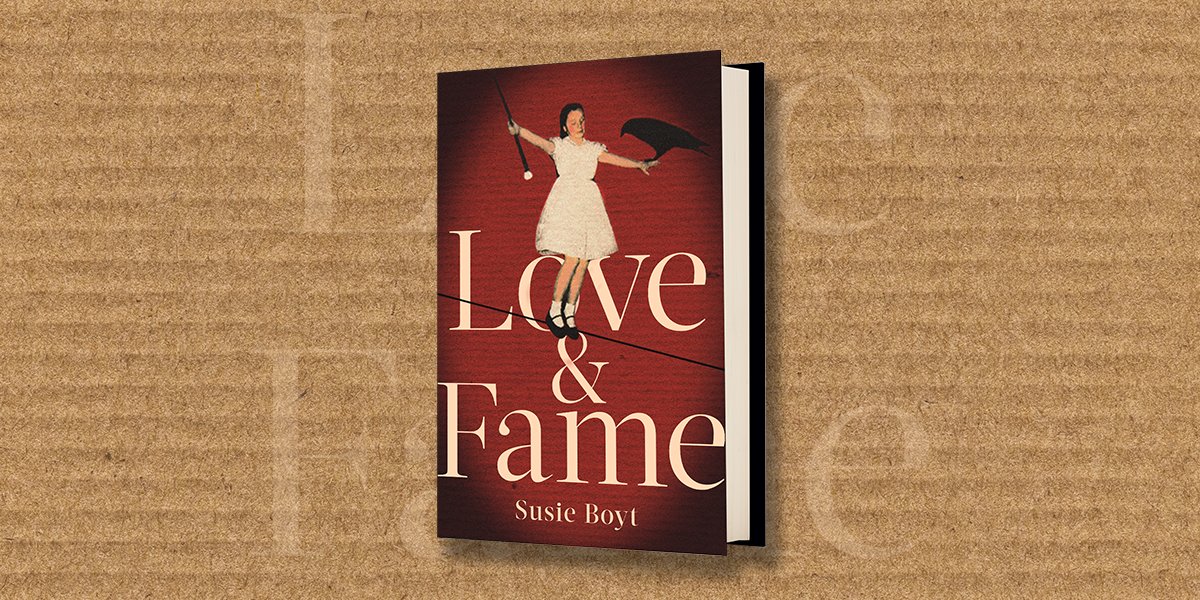
Her latest novel, Love & Fame opens with a theatrical monologue. No sentence is completed, thoughts are left hanging, each one linking to the next like an echoing voiceover. We hear the incessant worries of a person who feels everything.

Newly married actress Eve and her husband, Jim, who is writing a book about anxiety, are honeymooning in Chicago. Soon we meet Beatrice (‘Beach’) a bereavement counselor and her sister Rebecca, a journalist. All are connected by the passing of Eve’s famous actor father, John Swift.

But it’s anxiety itself which gets the starring spot in Love & Fame. Eve’s new husband Jim writes about it but Eve, herself, is living it.

‘Is your conclusion that anxiety’s a bit of a dark hero in a cloak?’ she asks him, for beneath his research lies a premise: Could anxiety actually be useful? Positive even?

Eve thinks not. At dinner with Jim and his agent, Max, she allows her thoughts on the subject to overflow:

‘I would say anxiety has cost me some of the very best things in my life.’

Suddenly Jim’s earlier remarks about anxiety being like a helpful friend – the type who prods you when you’re straying from what you actually want – are re-cloaked. As readers, we are left to reflect on our own experiences.

Those who loved Susie Boyt’s famous FT column will enjoy the same detail and intensity in this novel. Like the ‘Legendary’ cheesecake which Eve passes on her nighttime walk, such delight is sometimes best savoured in small mouthfuls. And yet – as with the best confectionery – I found I could not put this down.

Its serious subject is lightened by a number of laugh-out-loud set pieces. Boyt is brilliant on middle class liberal do-gooding. Jean Swift, while deep in mourning for her husband continues to invite young ex-criminal mothers into her home to learn cookery. A couple of the mothers are described as ‘lovely ex-shoplifters’ – the book is peppered with surprising juxtapositions and one-liners. There is a warmth and love of human frailty in Max’s comment which could equally be true about Love & Fame itself:

‘Eve – this is really a book about kindness.’

Perhaps it is in kindness that the antidote to anxiety lives. In the forgiveness that Jim finds so easy, or in Beach’s endless listening. When grief is allowed to surface, anxiety beats a path to the back door.

Judy Blume used to answer her readers’ questions, saying that she wrote from the memories of her own childhood. “When I dream. I’ll frequently dream of the house where I grew up.”

Nothing in fiction is truly invented; there’s a reservoir of joy and pain and memory which in reading this novel, shimmers translucent. These are the parts of Love & Fame which move for it is in the story’s mining of these personal depths that as readers we find our own worries normalised.

This is a book so brimming with heart, its dialogue so finely tuned and touching that it felt like the best kind of musical. A triumph of love over suffering that I did not want to end.

In the opening scene when thoughts are rushing around the character’s head, tailing off in anxious uncertainty, I realise what a gift we have in Boyt’s prose. In answer to the question, how does she know? It is her characters who show us.

In funny searing chapters we are reminded how hard it is to be alive sometimes but that a listening ear can change everything. Anxiety, in the end, may be neither hero nor antagonist but a sign that there is more left to grieve. Only after tears have been allowed to fall – on Beach’s couch perhaps – may we see anxiety slink away, or at least begin to speak in a softer tone.

Love & Fame is published by Virago, available to purchase November 2nd 2017. Pre-order here

All views expressed in my posts are my own. If you would like me to review your book, please visit my contact page, here.