You who sparks the sunset

This is the first post I wrote on my first blog 5 years ago …


You who sparks the sunset

20150924_163132

Try to make a mountain. Create a sky the same as the one you see. Form a tree with your bare hands, scattering each flaming leaf at the appointed hour. Mold a globe, not just any but, this one, this emerald basking in blue, this feat never before seen, this astonishing entity winking at infinity. Roll up your sleeves, go on. The tree is too big, you say, the sky too far, the globe too perfectly round and the mountain? Too high?

Then try to make a man. Mold his soul with your hands, make it lighter than air, make it soar.

Make a woman. Form her drumming with destiny; strong like sunlight.

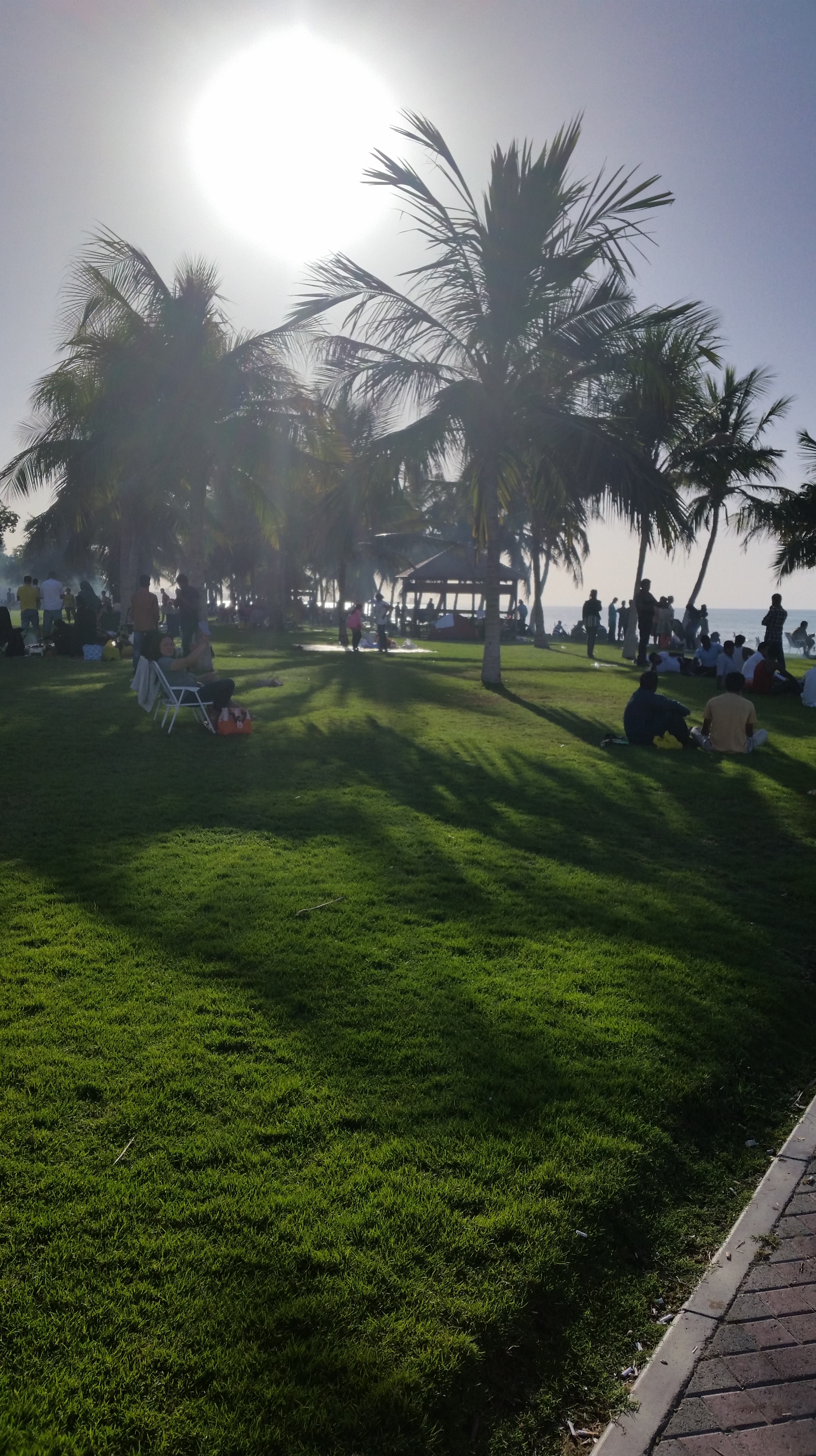
Then you can say it is only you who makes the waves return each time, lapping and whispering. You who sparks the sunset, washes the grass over with faultless ink, dyes the flowers that dark magenta.

Of course you know that you are one part weak to five parts strength, diluted by the fact you breathe, you see, you know. Fragile in your surest stride. With your body whose cells were designed to forget. Sometimes when you awake you remember snippets of another world and it is a world magnificent. A body which knows but cannot find the words, is mute before such glory.

Try to make a life instead, your life. Try to find your path. For you did not make the mountain. You didn’t paint the grass or raise the sun. You are not sky nor flower nor sun. You are of matter and bone and soul and heart, can soar can break, can choose and remember, can choose to forget. You are of many and you are absolutely one. Roll up your sleeves, go on, make a life.

Walking therapy

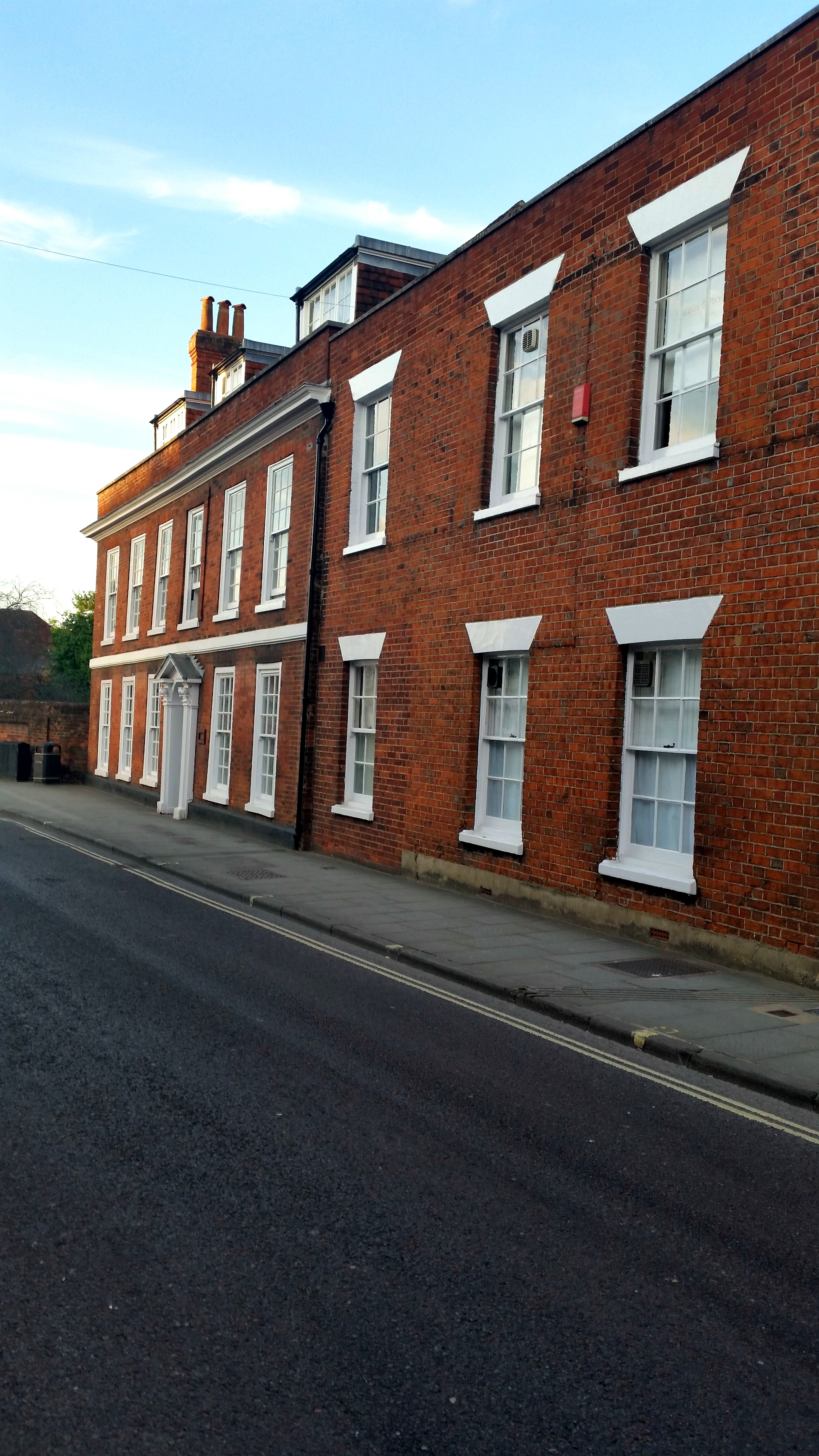
About five years ago I briefly swapped coffee shop meet-ups with friends for walks around the city. This was in Cambridge. A place which in the warmer months is lovely to traverse by foot or bike. Wandering the streets with others – as an alternative to sitting in a house or a cafe – had a relaxed intimacy, gained – who knows – from the air, or the greenery, the reddish antique bricks or the interweaving of visitors from around the globe.

20150710_124940

Yesterday I rediscovered the same pleasure but for a different purpose. I was told three weeks ago by my surgeon to walk.

‘It’s good for healing,’ she asserted.

I started walking slowly around the apartment, dodging the sofas, picking up the odd sock, re-arranging a bookshelf as I went. Clearing up is great if the place actually needs it but there are limits to the powers of recuperation found indoors. So I ventured out.

20150802_163519

We live on a stretch of land still under construction. The noise from brick being smashed and cranes wielding their mighty clamour had initially put me off opening the outer door.

But then I saw that there were birds. They look different here, wings watercoloured with streaks in fancy shades. They hang out in groups of twenty, rising like dust when their seating areas are disturbed. They perch on the roof, cooing in idiom.

birds

There were cats too. Beautiful perhaps, but the neighbour’s rescue wadi-cat is not popular in our household. (He enjoys nothing more than to sidle onto the balcony and greet our female cat with cobra-like hisses and territorial spraying.) Each week he wears a new collar, the previous one most likely lost in a brawl.

20150902_175319

I watched his brief stand-off with a black and white tom. Camera-happy I tried to catch his feline form in a natural pose. Grudgingly he acquiesced, snarling unrepeatables beneath fine whiskers.

I realised that to walk is to have freedom. That in movement there is a gradual shaking out from one’s self.

The communal back garden is not large but it has hills and greenery. On a clear day the contour of the mountains which surround half of the city of Muscat can be seen.

IMG_20131225_161554

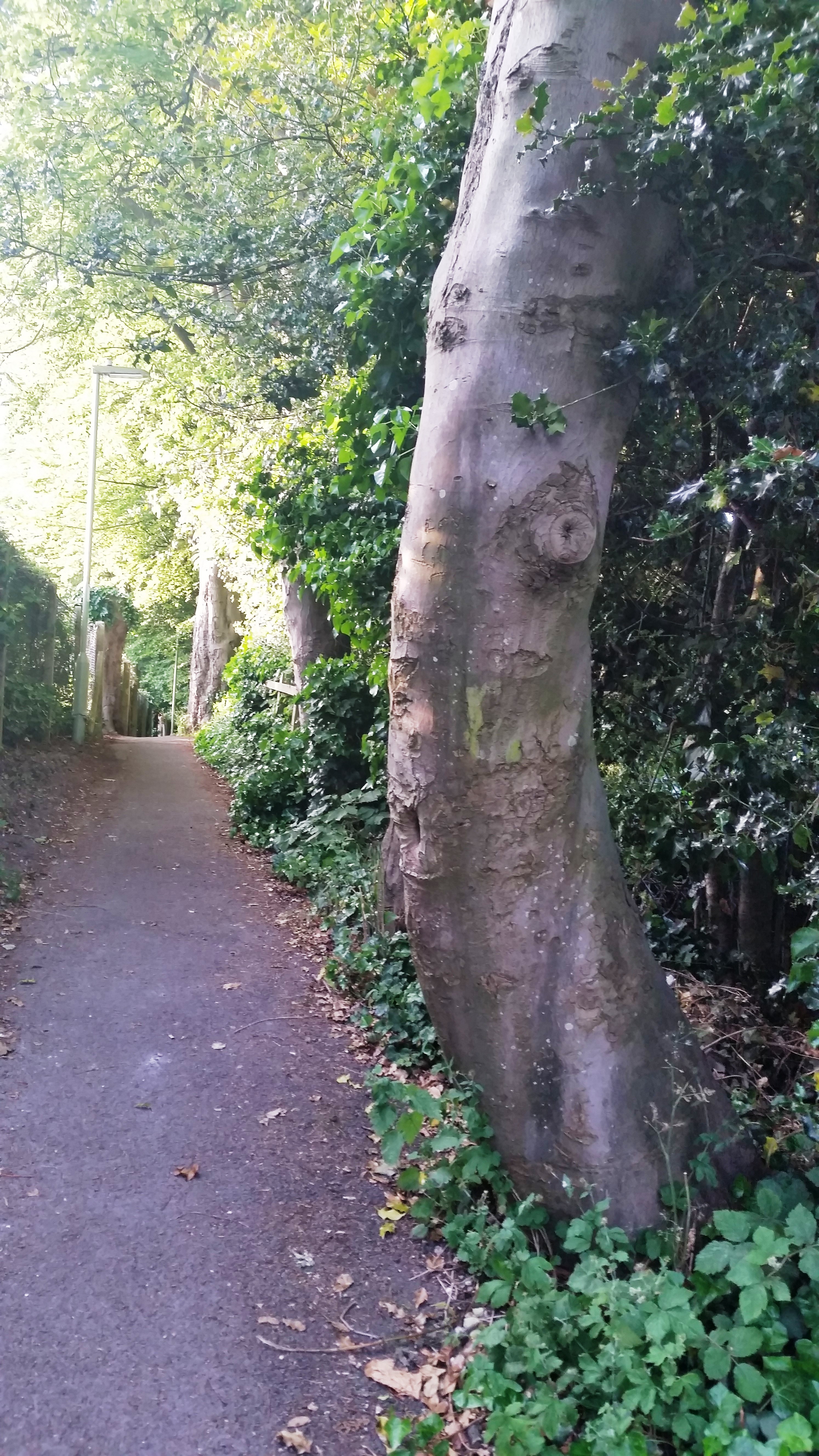
When I walk, all that feels strange and unsure realigns. Treading on grass has its own rhythm, a balance, connecting the earth with the flats of my feet, facing the vast skies.

With each breath, nature appeases pain. Miles of emerald grass distract, display their brightest shades. Step by step, the hand-hold that is nature supports. It heals.

If you enjoyed this post feel free to get in touch via Twitter here , and you can follow this blog by going here and clicking on ‘Follow Muscat Tales.’  

Madrid in a hurry: 3 highlights

20150716_195429

Budget flying has its own special magic. Stansted Airport at dawn resembled Burger King on a rowdy English Saturday night. Gangs of excited hens and stags preparing to take Europe by storm. The shops weren’t selling bottled water in normal sizes, only the flavoured kind which leaves the mouth like a pot pourri of aspartame and imitation peach. My 36hr trip to Madrid was already running 2 hours late.

Once you enter the parallel reality of the cheap European flight, count nothing as given. If they could, they’d put a slot machine by the airplane loo. The surprise freebie was the leg room at the front of the aircraft: a perk after the organised fight for a seat. The airline’s extreme economy also appeared to apply to runway metrage. When the plane touched down in Spain, it seemed to halt in under a minute, the braking so hard, we were all pushed forward like crash test dummies, stomachs in mouths.

But the destination more than made up for it, Spain’s capital: a great old smokey melting pot with a pulsing centre. Even the metro map resembles a heart, with veins leading off into the suburbs. The view as we landed reminded me of a film where Penelope Cruz, I think, and a newborn baby, traverse the capital on a bus. She holds him up to the skyline so the city is the first thing he sees. ‘Look!’ she exclaims in her beguiling accent, ‘Madrid!’

20150717_084915

I am in the middle of writing a novel set in the city and my trip was mainly to see if its tree-lined thoroughfares had changed since I was last there. Madrid has its own vibrancy. The directness of daily interaction which years ago felt brusque, had softened. Perhaps it was the searing temperatures, streets sizzling like fresh croquetas. Everyone seemed to have time for a chat.

Here are my three faves in the heart of a city which doesn’t stop beating:

Authentic local dishes: Despite being miles from the coast, Madrid allegedly houses the freshest seafood in Spain. They say an ancient route from La Coruña ferries it in regularly, ostensibly for the king. I certainly felt I was eating like one! The tapas too: raciones, pinchos (still struggling to differentiate the size margins) patatas bravas, alioli, beans, every type of paella – with its own special menu in some places – and efficient no-nonsense castillian service.

20150716_194727


Amazing art:
As in many capitals, diverse barrios sit cheek by jowl. I was staying in colourful Atocha. Turn the corner and you’re on Paseo del Prado, an avenue of huge plain trees, grand arches and three astonishing art galleries. I made a beeline for the Thyssen, my favourite of the three. On its pink walls in a series of subtly lit spaces, it houses a private collection spanning Belgian portraiture, old lit up scenes of Venice by Canaletto and into cubism. I had gone to view a painting I hoped was in the same place: the magnetic stillness of Rothko. It was.

20150716_195848

The noise of it all: The city speaks in sounds that form a symphony to the city’s occupations. Wait at a traffic light and a bird will coo from the lamp-post telling you when to cross. The s’s of madrileños are thick in sentences which end with a frank up and down. In the metro, the announcers are a duet of recorded voices, ‘Proxima Estacion:’ says the man, with a woman naming the station in a commentary that changes with the city above. Buskers range from the lone saxophonist to Peruvian panpipes and even an organ grinder transporting the pedestrian zone to the 19th century.

20150717_105522

It truly sinks in that I’m leaving Madrid’s unique cacophany when, waiting to re-board the budget delight, I sit at our gate listening to the announcement. First, the emotion of hurried Castillian: ‘Su vuelo puede sufrir cambios,’ (Your flight may suffer changes). Then a plummy English gent in restrained Anglo-Saxon: ‘Your flight may be modified.’ I’m heading home.

If you enjoyed this post feel free to get in touch via Twitter here , and you can follow this blog by going here and clicking on ‘Follow Muscat Tales.’  

Mopping up the Java

It was a surreal, nerve-inducing moment. ‘Like a weird doctor’s surgery,’ someone said. ‘Or speed-dating.’

I thought: We’re subs at a league game. Waiting on the side, half scared of being called, but hoping for the chance to play.

20150618_202143

There we sat, poised to to meet publishers and agents, next to a hall at The University of Winchester’s Writers’ Festival set out like a school parents’ evening. In the corridor, a pensive string of writers waiting to discuss our word-babies.

Nobody spoke much. I tried to chat with the guy next to me. He looked faintly ill.

20150618_200144

‘Ok, everyone, next wave,’ said an administrator, and we entered the hall like birds migrating to the sun.

As I sat down, my bag nudged the publishing director’s coffee cup, pouring thick brown liquid over her business cards, the table, her person. I was mortified. She was gracious. ‘Just talk me through your novel while we’re clearing up,’ she said.

Over lunch she had read the first chapter, synopsis and the A4 sheet stating my interest in her publishing company. I said: I like that it’s small, established, independent. I thought: I can still see a chocolate-coloured pool beneath your papers.

She handed the chapter back and told me what she liked, what needed work. Her comments were more promising than I had braced myself to expect.

‘Finish writing your novel and then send it to me. I’d like to read all of it.’

It felt like a goal from fifty yards. I won’t be celebrating with a coffee.

20150531_180456

As always, please feel free to comment 🙂

If you enjoyed this post feel free to get in touch via Twitter here , and you can follow this blog by going here and clicking on ‘Follow Muscat Tales.’  

Muscat’s heartbeat: On the music of Oman’s coastal capital

The sun is lowering over the Seeb shopping mall. A row of men in white robes and pastel turbans stand on the roof overlooking the airport. Necks craning, one has a pair of binoculars. Has the niche pastime of plane-spotting finally reached Oman?

Below their feet, in the dim light of the car park, four-by-fours are pasted with the image of an elderly statesman. The same face taped to other vehicles’ windows, but a young soldier, this time, in military fatigues.

20141115_171931

A look at facebook reveals the runway-watchers’ intention. It can hardly be contained between exclamation mark and expressions of praise. For the first time since I moved here last autumn, the country’s monarch, Sultan Qaboos bin Said is flying home to Muscat after eight months of medical treatment in Europe.

It can be tricky as a Brit to fathom such love for an unelected leader, and as hard to ignore the legacy he is building. Sultan Qaboos’ careful diplomacy in the region may well ensure his place in history as a protector of peace in a country which has the religious – and ethnic – plurality of Singapore and its own tenuous geography.

But Oman’s ‘behind the scenes’ persona is not coyness. The Sultan – who deposed his father in a bloodless coup in 1970 – draws on a passionate commitment to culture, in particular music, to address – and dress – his country.

20141115_163442

I moved here in September having married an Omani, spending the first few weeks learning the lay-out, looking for the place to where all roads lead, the ‘city-centre’ as we call it in the UK. But its social nucleus remained elusive.

In Giles Tremlett’s travel book, ‘Ghosts of Spain,’ he describes the Costa del Sol, ‘this car-dependent ribbon of growth as it defies you, like a small Los Angeles, to discover its centre.’ Muscat’s string of A-roads is similar, stretched out like veins without an obvious heart.

boys

Its natural geography places the city in the middle of a range of rock which at sundown becomes a sharp, charcoal outline, as though the roads and buildings have been carved from the jagged face of the world. Heading East, the ocean, laps right up to the edges of the city.

Last month, caught in a tangled rope of vehicles, I found myself adopting the local habit of lane-weaving. I didn’t want to be late for the concert of the year. I swerved to avoid a man ambling across the highway, this brush with death quite normal at certain times of day.

20150305_173945

When I arrived at the concert the rain had already started, the mainly British audience huddled underneath a huge tunnel in the Shangri La luxury resort, t-shirts slapped to skin, grinning at the irony. In these normally baking parts, a musician was over from the British Isles to play an uncovered amphitheatre, and it was pouring.

20150227_195330

The crowd had fought for tickets talked up by the local radio stations, the place filled with sopping wet bewildered forty-somethings and their teenaged children.

Up on stage, standing solo with guitar, was Ed Sheeran sliding fluently from grunge to R&B. The singer, in true British fashion, was apologising for the weather. By design or spontaneous decision he had decided not to sing his bluesy invocation, ‘Make it Rain.’

20150227_221942

Rock music is not the only circuit staple here. The Sultan’s public treasure, an opera house, rears up in marble-like grandeur just metres from the sea. Its line-up this year has ranged from Classical to World (Angelique Kidjo) to a Flamenco season which saw standing ovations every night. East of Egypt it is the only building of its kind.

‘So long as the audience is happy, we are doing our job,’ enthuses one of its directors walking us into the lobby after an astonishing set by flamenco guitarist, Tomatito.

opera house picture

The opera house’s enthusiasts are a mix of Omanis and expats: British and Indians, the latter an established minority who make a significant contribution to Oman’s business and cultural life.

Most of Oman’s population live in the Northern capital, Muscat. Numerous venues house music, but the opera house has a unique hush about its carved interior, like a theatre seconds before the curtains rise.

Two months after Tomatito I found myself back within its marbled walls. A friend and I had agreed to meet in the lobby. Ten minutes before curtain call, the building was buzzing with pre-concert greeting.

20150321_141852

Omanis had appeared in large numbers this time, the men in national dress and the women in every swathe and colour of cloth. Sweet oud perfumed the stairwells, recognition of friends, peppering the air. Despite the spaced out roads, Muscat has a village closeness.

We were there to see pianist and composer Omar Khairat. I admit I hadn’t heard of him before we settled into our last minute seats. The audience knew him well. As people cheered the elderly musician, I remembered something I was told on my first opera house visit.

opera hse inside

The culture of classical music did not exist here, in Oman, when the Sultan first envisioned this spot. It needed to be nurtured. A certain etiquette was established, the wearing of national dress by locals, an example. Another was the audience’s expected response which needed to be broken in.

Even now, people are more vocal than in other venues I have been to. In this state of few elections, Omanis seem to hold music as a democratic right. Omar Khairat’s concert was no exception.

The drummer at the back of the vast orchestra stopped beating the percussion to hold his hands in the air. He started to clap, waving at us to do the same. The crowd – already warm – ignited. When Omar Khairat asked us to sing, it was all the audience could do to not bring the roof down, the shared tunes embedded in the heart of the peninsula.

Energy flows through Muscat’s opera house in the form of talent from the Gulf and far beyond. The veins of the city urging and re-circulating audiences delighted by their leader’s vision in building such a celebration of a genre he clearly adores.

This weekend sees opera singer Joyce di Donato set to hold its stage. The publicity on the Royal Opera House website shows the American diva beaming in a scarlet dress, a fitting colour for her awaited contribution to the lifeblood of Muscat’s musical heart.

heart

If you enjoyed this post feel free to get in touch via Twitter here , and you can follow this blog by going here and clicking on ‘Follow Muscat Tales.’  


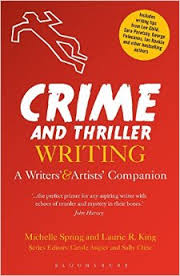
A Thrilling Companion: Book Review

How would your ideal fitness instructor be? A kindly ear to those New Year’s resolutions? Strict? Funny? You may wonder where this is going. I ask because I recently started to plan a thriller. If you’ve ever written something lengthy you’ll know it can be a kind of marathon. Searching for guidance, I found it in A Companion to Crime and Thriller Writing via a dedicated (and dead-pan) pair of literary personal trainers.

Crime writers Michelle Spring and Laurie R King guide the novice around the machinery of Thriller writing. Revealing their own practices, this study of style and structure is delivered in tangible detail, with dark humour.

With guest chapters by authors Val McDermid and Sara Paretsky, among many others, reading this guide felt similar to sitting in on a panel of experts in conversation, without the hefty conference fee.

001

In case you’re interested, in a personal trainer, I’d look for someone:

– Encouraging
– Funny
– Well-studied on bones, muscles and the like

This book has all of these qualities, almost. I didn’t really learn about biology – nor was I hoping to – beyond the cheery topic of the post-mortem. But I did gain an appreciation of the text as a physical entity and that Crime writing must reach towards substantial human truths if it is going to be more than a gruesome news story.

Encouragement from Spring and King includes sharing their own writing styles. I must admit it was a little tricky to reduce my creative process to only two options (Am I an Orderly or Organic writer?) as I suspect that many of us use a combination of strategies for getting our writing organised. But knowing that these modes exist did make me take a lighter look at my own pile of out-takes.

Photo0633

George Pelecano’s chapter, ‘One Book, one teacher’ is profound. Taking his role as writer beyond the pages of fiction, he here details his work on literature in Washington DC’s prisons.

The beauty of this book is that it both trains and entertains, makes the goal of writing a thriller feel possible. Like the best coach, it shares a wealth of knowledge and never condescends.

crime book

**

Interested in Crime and Thriller? I recommend this collection of short stories.

I review literary fiction, thrillers and non-fiction books on this blog as well as exploring the creative process.

If you enjoyed this post feel free to get in touch via Twitter here , and you can follow this blog by going here and clicking on ‘Follow Muscat Tales.’