‘Everybody knows’ – My Pandemic in a Foreign Land

‘And everybody knows that the Plague is coming
Everybody knows that it’s moving fast
Everybody knows that the naked man and woman
Are just a shining artifact of the past…’

Leonard Cohen

I started writing this piece in early April 2020 when the world was shutting down, when we didn’t know what was to come…

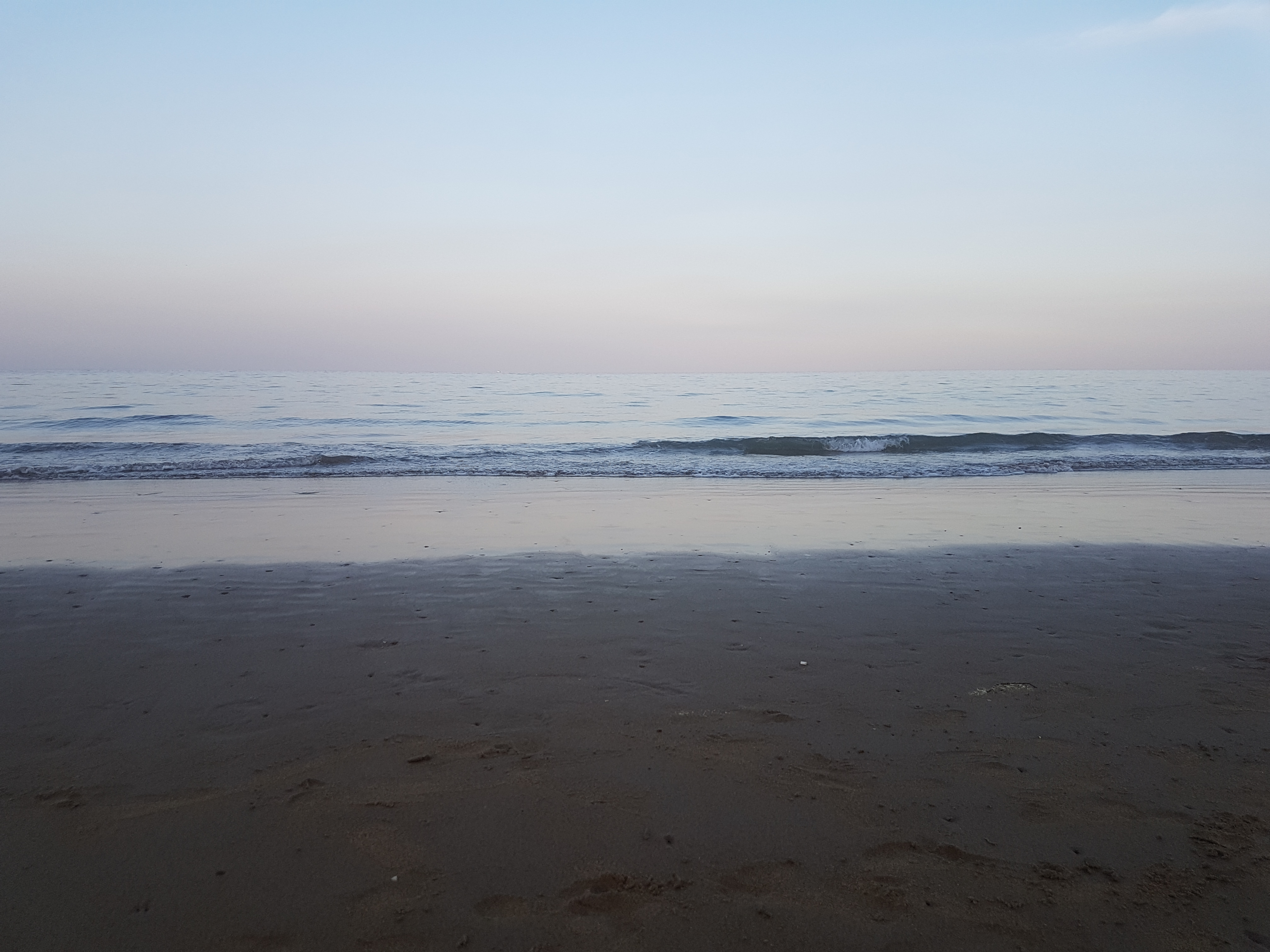
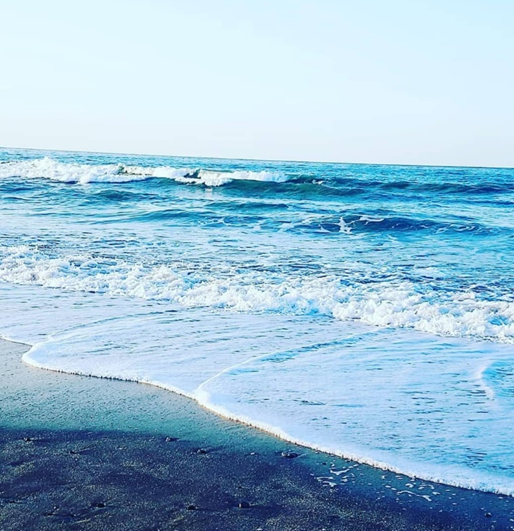
I was living in Muscat, Oman. Already a fish out of water when the city of A roads and no discernible centre went silent. Only the waves crashing against Azaiba Beach seemed to soothe the sense of emptiness around.

I want to honour that time because perhaps it is only now, three years back into my life in the UK that I can look back…and breathe.
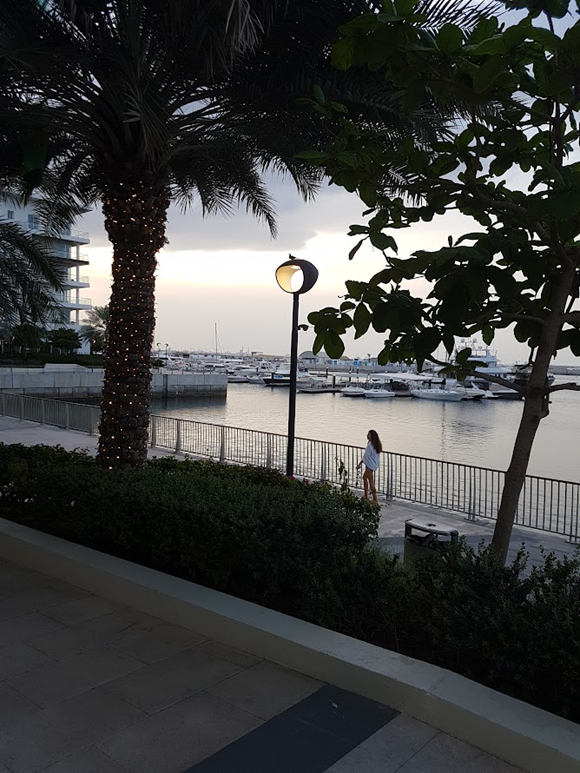
The speakers at the centre of The Wave’s commercial zone in Muscat are still playing music – or muzak – to accompany shoppers and strollers, cafe loungers, as they enjoy the last of the evening sun. But there are no ears here to listen, or almost none. And the screens which line the boardwalk next to the Marina, showing chefs at work, families eating in restaurants – restful candy for the leisured eye – are testament to another time, when walking freely is not privilege, but norm.

I’m reminded of camping as a child, and that time before dusk, when people parade the dusty campsite avenues having showered after a day at the beach, relaxing in the evening light, as they smile or nod hello. Because everybody’s part of something bigger. We share the same air.

And everybody knows.

But what exactly did we know in the streets of The Wave, Muscat at 5.45pm on a weekday evening in April 2020? What could we discern of the months of restriction yet to come?

That afternoon, I set out on my daily walk – by car. In this sense, Muscat is like L.A; you have to drive the endless freeways to find signs of life, and even then, the city exists in isolated pockets: Azaiba, MQ. The Wave – societal limbs on a body without an obvious heart.
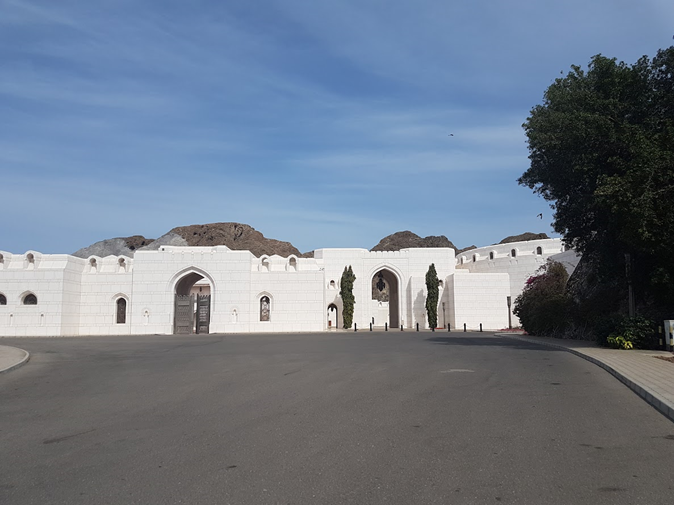
When I first moved there, I searched diligently for a community hub, the cultural centres, museums and coffee shops – which did exist, but in a disparate way. After 8 years in Oman, I eventually resigned myself to the truism of Gulf Arab life; the extended family IS the community (And its setting? Cool palatial homes with sitting rooms so spacious you might lose yourself or others among the beige and fawn, the Persian rugs, the semi-see through blinds). In Oman, external social infrastructure is still but a sketch on the city’s rugged landscape.

Earlier that evening, in 2020, my usual choice to stroll – Muscat Hills Golf Course – isn’t letting people in. A couple of kilometres down the road, the beach at Azaiba is manned with police officers who politely tell me that the sand and the sea are off limits.
I turn the car around and wonder: In normal times, where exactly was the busiest part of this city? The place where everybody congregates. And I picture the cafes and shops burbling with life at The Wave, a nearby housing and commercial district. And I reason: Even if all its locales are closed, because The Wave is also a public zone full of villas and apartment blocks, then nobody can shut it down.

So I drive straight there and find there’s almost no one thronging its sidewalks apart from a few children let out of the cage of an apartment, calling up into the fast-fading light. Behind them, employed adults are cajoling; they too are taking in the air. 

Before covid hit, trying to practice my limited Arabic with the supermarket cashier, I was reminded of the Jamaican slogan, No Problem! which became universal in the 1980s.

Oman is truly the Jamaica of the Gulf. Its population, as small as an island’s, is intricately linked via relaxed social custom. Strangers ask of your health, your family’s health, their calm politeness is a balm, any inconvenience in this country relieved by the chilledness of its folk. 

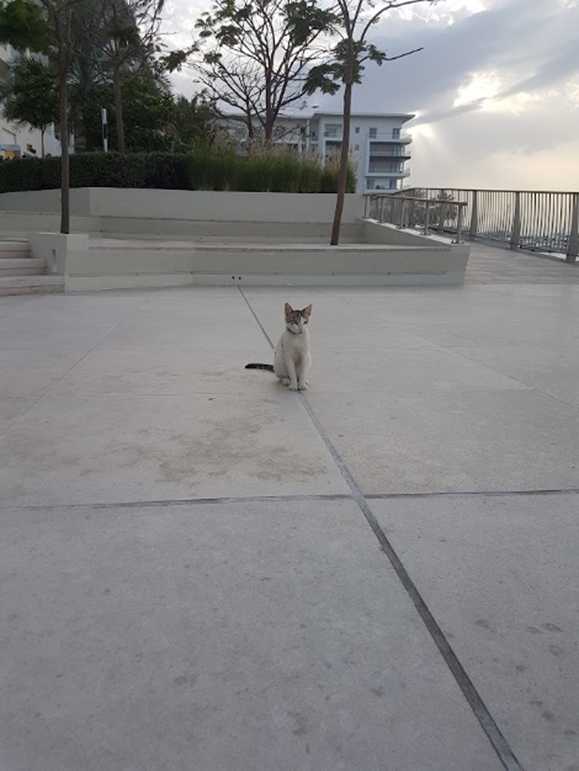
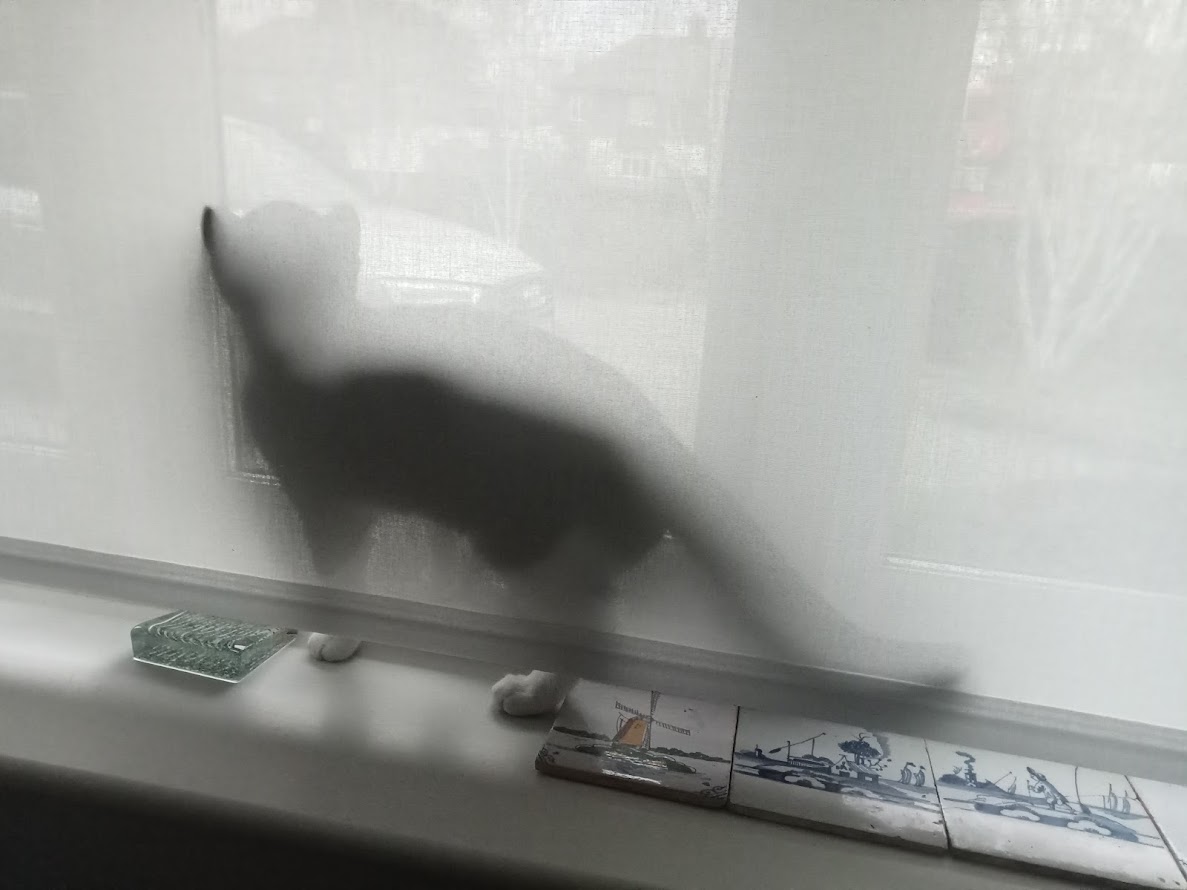
But the only community to be found on the streets of The Wave that evening in April 2020 are cats. They dot the paving like dancers on a near empty stage. Tame ones with ribboned neckpieces. Feral ones the colour of sand. With the sea to my left, I skirt the boardwalk, weaving around their nonchalant poses. I make a poem in my mind, unaware that this temporary silence may take the best part of two years to break. 
And then, within a month, everybody knows.

We mask up. Dettol spray becomes our welcome home. In Oman, my life pre-covid had been quiet. Soon I became like a lone vessel floating on the Arabian sea.  

A few weeks in, my then husband was called to Germany for an urgent family matter. He spent weeks there with no end in sight.

And I was left, for the first time in my life, socially distancing in a flat in a foreign land. Entirely alone. For several months I had been writing – the peace in Oman had been an ideal backdrop for the work – but now, the silence seemed to warn. 

One day, visiting an acupuncturist, the rickety lift to the top floor abruptly jammed. As I waited, static, between levels, I pressed the alarm button, and thought: What if nobody comes?

Who will even know I was there?

Later that week, doing yoga in our living room, I was jolted out of a pose by a face staring through a window at me from across the apartment blocks. Suddenly seen – unknowingly – fear rose in my throat. Not from the sudden visibility, but the sense of being an object to observe that alarmed. I was peripheral to the world – an extra; no longer contributing to this great human scheme.

As the months trudged on, the uniqueness of that particular spring and then the summer appeared to become a time when pretty much the whole world was holding the same thought – a sudden unity of mind.

Everybody knows. 

News reports: Daily acts of bravery: the willingness to help. For once, we weren’t each other’s enemies. We might have been each other’s only hope. And, of course, the cost to our world: Chronic uncertainty. Daily loss. Distancing, shielding…

And then, within a few months – it seemed – fast on their heels came the vaccine. Astonishing, the speed of it – our rope to normal life again.  

During those pandemic days, in Muscat, I felt my mind empty the same way as the streets. As though every synapse, formerly nurtured by daily interaction, could no longer quite reach the next. I stopped wanting to eat. I couldn’t read. When a single line of poetry touched me, I wept without end, relieved to be one of the living.

There is often talk of an epidemic of loneliness, but before 2020 I’d always enjoyed my alone time. This was different though. That fall, I joined an online short story writing workshop where the tutor suggested that as a way of writing into character, we might each look inside our personal handbag and delineate its contents on the page.

But like my mind at the time, I guess – or my life in 2020 – the mini leather holdall sitting in the hall of our Muscat apartment contained practically nothing at all. Why should it? There was nowhere I needed to be.

I remember thinking, that afternoon: What does it even mean to have a full life? And when I eventually logged off, I stared for an hour at the screen.

In 2022, flight restrictions lifted, I finally returned to my hometown in the UK, and on another media platform, I posted this:

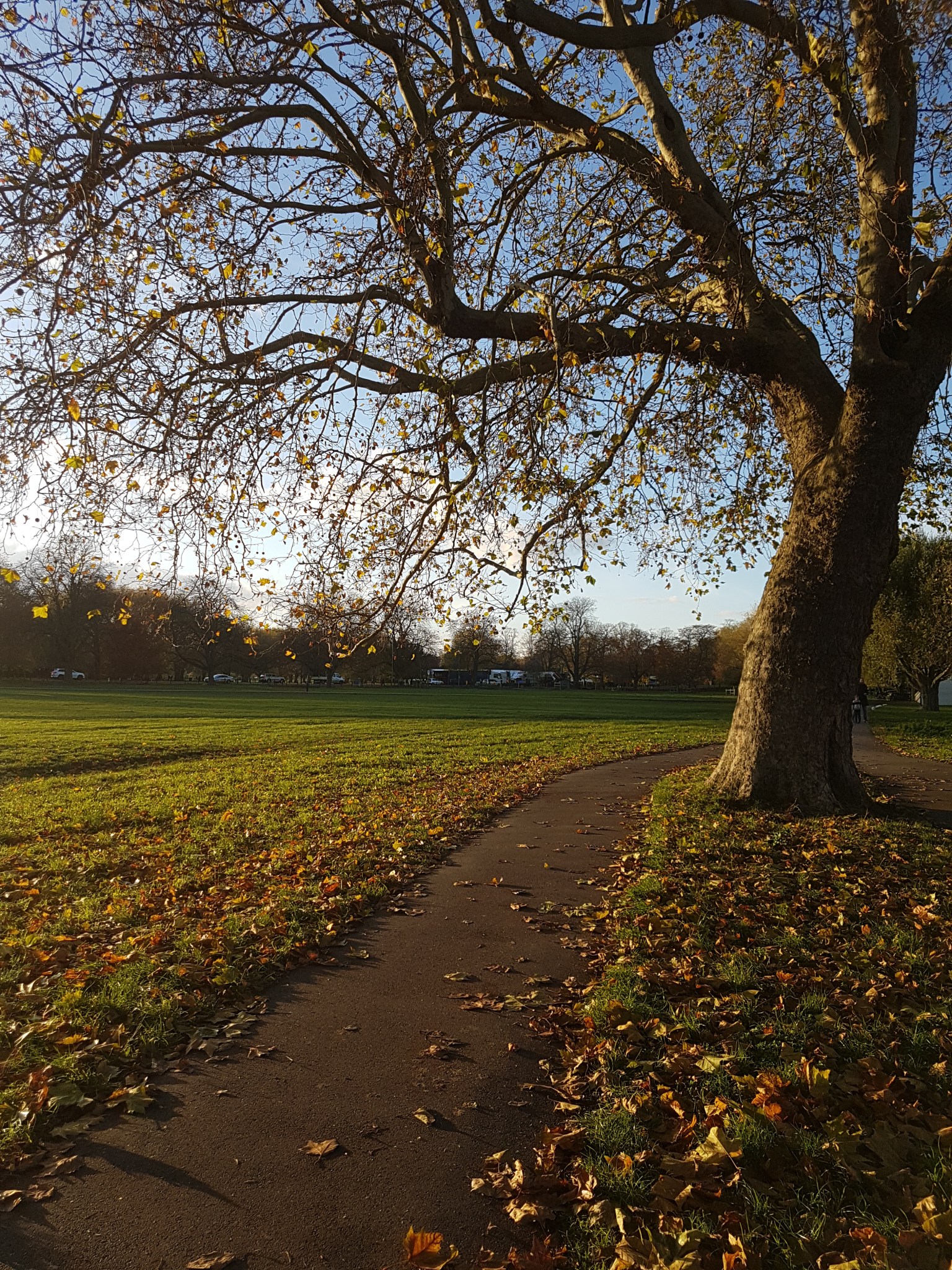
The joy of returning to Cambridge wasn’t just about old friends and family ties, the greenness of the parks and the familiar sounds from the broad East Anglian skies. When the world woke back up again, I sensed a softening. We had all felt the tug of mortality, the veil between the living and the dead shift far nearer to our personal experience of daily life than many had known before.

How are you? people began to ask in shops, and then they really listened for the reply.

It took time for us to learn to stand at a normal distance from each other again, to not flinch at another person’s sneeze, but slowly we did.

The notion that behind closed doors others’ lives weren’t as perfect as social media might claim became an accepted reality. We had all, after all, watched the BBC newscaster’s home interview three years before, suddenly interrupted by his kids wandering confidently in front of the camera, into the room. And in that moment, we had met his humanity.

Perhaps over the long months of drying masks, of sanitised hands, and enforced distance, a time when we were forced to live online and see right into other people’s homes, we had begun to accept each other better for it.

Did the pandemic return us to ourselves? To the ‘soft animal’ of Mary Oliver’s poem Wild Geese?  Looking around the world at recent events, this notion might be a bridge too far, but when I returned to the local cafes, the museums and bookshops of my town, in 2022, back to my job in a local school, I did perceive a shift.

Workplaces have become – by necessity – more flexible. There is hybrid working. The resource of a ‘mental health day’ if you’re feeling out of sorts. Are people kinder? Is the extension of grace becoming part of the vernacular?

I began this blogpost with a snippet of Leonard Cohen’s lyric: ‘Everybody knows.’ And the description of a pandemic, devastating and enjoining, like a time of war, or a natural crisis on the earth.

Everybody has known. It cannot be unknown. This is what I have been left with. There is strength in communally surviving adversity. We have walked through it; and it has shaped us.

If you enjoyed this post feel free to get in touch via Twitter here , and you can follow this blog by going here and clicking on ‘Follow Muscat Tales.’  

Writing the Unconscious: What happened after I finished Novel 1


We are constantly telling stories. The unconscious wants coherence.  And so we fill the spaces with narrative.

Beginning, middle, end.

I have to stop myself, sometimes. I catch the writer in me wanting a midpoint. A moment of dramatic reversal. 

A year ago, with the help of a wonderful developmental editor, I finished writing my first novel. I remember her asking me afterwards if I missed my characters. How I felt about all that work and then the moving on.

In all honesty it was a relief. The novel had started to feel like an albatross around my neck, preventing me from exploring other forms.

After I was done, I queried literary agents and came across tons of brilliant resources for querying writers,

like this video: 

and this blogpost

and this podcast.

I spoke to family and friends, I gathered my strength and sent out around 20 queries.

I waited.

But no one took the bait.

I did however receive some valuable feedback from one agency, the people who represent Damian Le Bas who wrote The Stopping Places *

My novel is set in modern (and 1960s) Spain with a cast of almost entirely Spanish characters. 

The agency said they’d enjoyed my writing but didn’t think they could sell this book to a UK audience. They asked me to send them the next one once it’s written. Two other UK agencies responded similarly.  (Gimme a sec, I felt like saying, I’ll just whip one I made earlier out from a drawer!)

So, I stopped waiting for agency replies and started experimenting with poetry and short fiction.

I enjoy the technical challenge of the short story. A person can tinker with them for days or weeks, sometimes getting stuck on a paragraph or sentence where nothing seems to work. But I’ve found that if I show up day after day – if I keep going – the story, eventually rights itself, like a ship heading back on course.

The waves of my subconscious are calmer when I write. As I start on novel 2, the bulk of the work seems to happen when I leave my desk. The body moves and the mind loosens its grip. Some problems are practical: How old are my characters? How do they speak? Chunks of imagery or dialogue present themselves when I’m out walking or in a downward-facing dog.

Short story writing has taught me to be tight about sentences but a novel first draft is an outpouring that I try to let spill as it will. Listening hard to my characters because if I plan too much, I might just quash their flow. (I like this resource from Lauren Sapala about not dampening ideas with too much preparation…)

I’ve set myself the goal of a messy first draft by Christmas. Readers of my blog, family and friends: please keep me accountable. 🙂

*(a memoir about growing up in the UK Gypsy community and the author’s revisiting of the ‘stopping places’ of his childhood. Incredible book! My stand-out read of the pandemic.)

…………………………………………………………………………………………………

Readers, writers, poets, actors, artists, what are you working on? Feel free to comment below…

If you enjoyed this post feel free to get in touch via Twitter here , and you can follow this blog by going here and clicking on ‘Follow Muscat Tales.’  
Book Review: What Doesn’t Kill You: Fifteen Stories of Survival

wp-1591097579901.jpg

‘What Doesn’t Kill You,’ is an anthology of short stories and a couple of philosophical essays centred on a single theme: adversity.

Its contributors are authors, journalists and figures from the British media, and the topics it covers are broad.

I enjoyed reading ‘What Doesn’t Kill You,’ for a number of reasons but not for the ones I was expecting. If you love – as I do – to leaf through the overcoming of hardship – the long-earned joyful walk to all kinds of personal victories – then this may not be the book for you.

This anthology, travels, instead – to borrow a term from Pilgrim’s Progress – to a series of ‘sloughs of despond,’ personal difficulties which its writers have experienced and then invites us to take a look around. This may sound bleak – and many of the tales here are predictably dark – but there is also something deeply connecting in reading of another person’s ‘Struggle’, ‘Self’ and ‘Striving’ (the titles of each section of this anthology) without necessarily learning of their happy ending.

Indeed, despite the occasional musings on personal transformation and some beautiful philosophical insights (the elliptical title is borrowed from Nietzsche), this anthology could not be classed as ‘uplift lit.’ Healing, or even transcendence of past pain is not the focus of this collection.

This said, the writing (and editing by Elitsa Dermendzhiyska) is fabulous. There are breathtaking lines to take away – language which takes us closer to what it feels like when life’s sharpness moves us to the edge.

The exquisite surrealism of Irenosen Okojie’s ‘Three Wise Women’ is a huge treat:

‘I sat in train carriages watching for a far-flung white calla lily to manifest from a rip in a seat.’

Okojie’s storytelling is utterly compelling – poetic and precise – and her descriptions of ‘winter’ searing in the way which they evoke the alienation of an anxious mind.

Alex Christophi’s piece, which is both of the mind and rooted in the flesh, takes us through the recreation of memory and its accompanying thoughts. His words on coming back to present stillness are arresting:

‘…when they finally stop running, they can actually feel the world spinning.’

The meditations on ‘disappearance’ which appeared throughout this anthology were also a thrill to read:

In Ed Mitchell’s story of alcohol addiction, ‘Not Wasted’ where he describes how he went from an affluent lifestyle as a television presenter to living on the streets of Hove, he writes:

‘I disappeared for a year: a sea front ghost.’

‘A Disappearing Act’ by Kate Leaver is a moving account of overcoming an eating disorder, clear-sighted on what it meant to withdraw from ‘the act of living my life’. She writes:

‘It was my best effort to vanish.’

And I particularly liked Hazel Gale’s exploration of leaving one’s own body in ‘The Last Fight’. Her disappearance (and later re-appearance) in her own physical reality, is the story of reclaiming her personhood:

‘What I’d been calling the Self was forged solely of what I thought was required of me by the Other.’

Memory’s disappearance is acutely studied in Emily Reynold’s ‘My Unremembered Life’:

‘Trauma simultaneously erases memory and rewrites it,’

while Elitsa Dermendzhiyska’s tale of using economic theory to try to make uncertainty vanish from her daily life, lured by the ‘promise of an underlying order’ contains great beauty in its truth and vulnerability.

wp-1591097941271.jpg

Peppered throughout this collection are nuggets of inspiration, on our personal agency in not just surviving adversity, but the ways in which we might exist in its wake:

‘If I don’t want to go back to prison,’ writes Cathy Rentzenbrink, on tending to herself sensitively in recovery from PTSD, ‘I have to make sure I keep the conditions of my bail.’ and for each of these writers – and for many of us – this keeping out of the ‘prison’ of self-protective suffering might look quite different.

Ben Saunders explores the futility of ‘striving’ in the last section of the anthology, through his piece ‘A Very Long Walk in a Very Cold Place.’ His is a gripping real-life adventure to the North Pole full of grit and grimness, where the true prize cannot be gained externally.

Nature is also at the forefront of A.J. Ashworth’s ‘Eight.’ Facts and images of the sun weave beguilingly through this powerful account of living with panic attacks.

The stories in ‘What Doesn’t Kill You’ neither sugarcoat nor glamourize the difficulties encountered by its authors. There is courage in these very personal tales, many as raw as the pain they’ve endured.

Rory Bremner’s essay is a beautiful description of living life with ADHD, both sensible in its advice to those experiencing similar, and celebratory of the wealth of expression he feels the condition has brought him. His refusal to see ADHD as a problem, instead as a part of himself to be loved, is key to the way that he chooses to live.

In his essay ‘No Cure For Life,’ Julian Baggini takes a characteristically rationalist approach to suffering, shunning the notion of the ‘happy ending’ sold to us by self-help evangelists. He observes the uneven way in which life’s slings and arrows appear to be handed out, and seems to underscore some of the thoughts of M. Scott Peck in his seminal book, The Road Less Travelled:

‘Life is difficult. This is a great truth, one of the greatest truths.’

However in Peck’s book he goes on to say:

‘It is a great truth because once we truly see this truth, we transcend it.’

While ‘What Doesn’t Kill You’ isn’t generally about transcending the adversity it portrays – it reads more as a panorama of lived experience – the gems contained within make it well-worth a look.

I loved the style of Lily Bailey’s ‘The Lily Show’ and found her stream of consciousness sentences a brilliant vehicle into the hellish reality she employs to keep her safe.

‘Maybe…they’ll smash through the set walls and rescue me..’

This is as real an account of mental illness and its attendant isolation that I have ever read.

But what I loved most about ‘What Doesn’t Kill You’ is that it points to other books as safe crossings and scaffolds when life gets tricky. There are some great book recommendations here – from JD Salinger to Clarissa Pinkola Estés – so many of the writers in this anthology finding solace in the printed page.

It has indeed been my own experience that there is a deep hopefulness in the occupation of reading – in seeing the story of another played out and repurposed purely for our benefit – which can be like a hand-hold through life’s sometime rough terrain.

‘Reading was, as ever, an ally in taking my mind away from itself,’

writes Cathy Rentzenbrink.

And it is this which makes ‘What Doesn’t Kill You’, a valuable book shelf addition; each of these 15 pieces – while simultaneously distracting us – draws us closer to our own humanity, especially in this time of societal introspection.

It is always hard to believe that the courageous step is so close to us,’ writes David Whyte at the start of the anthology, and in celebrating the beauty and plurality of each of these writers’ challenging life experiences, ‘What Doesn’t Kill You’ empowers us to find our own possible steps when life feels like a struggle.

What Doesn’t Kill You is published by Unbound, available to purchase here (among other outlets) from 11th June 2020.

I review books I’ve loved. All views expressed in my posts are my own. This blog is not affiliated to any other individual, company or advertisement.

Please note – I am currently reviewing selected books whose launches have been affected by the current Corona virus outbreak. If you are an author or publisher please feel free to get in touch (see below) if this is of interest.

If you’d like to email me, please visit my contact page, here.

Your comments as always are welcome…

Developing Voice: How a singing teacher coached me into writing

bird

Yesterday I clicked on a Twitter post without reading the intro. I saw ‘Writing’ and ‘Advice’ and thought: This one’s for me. I must have been two paragraphs in when I realised I’d read this writer’s work before.

I glanced at his name and yes, I was reading the Internet’s Chuck Wendig. Instantly recognisable, his style mixes zany metaphors with random phrases. Like some kind of surrealist stand-up, it all feels crazy and at the same time serious and to the point.  If you want to get a sense of Wendig’s work, you can read his writing advice here.

One of the reasons I think his prose is popular is that he has mastered Voice. And Voice is one of those elusive things like Grace or the joy of two drops of rain in Muscat that almost defies description.

One Cambridge winter, before I’d started to sit down regularly to write, I saw an advert for a small adult choir based in one of the colleges. I was excited, a little apprehensive and went to the audition to sing my piece.

My hands fluttered as I battled through my chosen tune, trying to project my voice, only having sung for fun, I felt unsure of what I was doing.

You sang quite nicely,’ said the choir director,  ‘But I could hardly hear you. Work with me and you’ll be fit for the choir in no time.’

For the following few weeks she gave me terrifying private lessons. She taught me like the opera singer that she was, correcting my posture, the shape of my mouth, my pronunciation, stopping the piano and starting again, giving me homeworks of repeated trills which I feared might alienate my housemates forever.

But by the end of the month something had shifted. I didn’t join the choir although I had learnt a few skills, and I didn’t continue with the teacher. What changed is that I no longer felt afraid to sing in front of others.

When I consider written Voice, I think, of this. The willingness to show who you are.

It comes through in the words we choose, how we order sentences, the topics we want to explore, our humour, the rhythm of our prose and like singing, we can only control the sound we make up to a point. Half of it is in the ear of the reader.

Even if I disagree with him and Stephen King about adverbs (another blog post entirely), I think people like to read Chuck Wendig because he is being who he is without apology and that comes through in his Voice.  Becoming acquainted with, practising, and enjoying one’s own writing voice fulfills an important function for the reader.

When I lived in Greece, I shared an apartment with a couple. One evening they invited a friend over. I sat with them but my limited Greek made conversation difficult. The friend had a beautiful speaking voice. The kind of voice you can sit and listen to and never get tired, like the rush of bird’s wings when they take off all at once. I kept thinking, I’ll go back to my part of the apartment soon but I kept stalling and it was 1am by the time I retired to my room.

A well-modulated voice is pleasing to the ear. It’s much easier to capture what a person is trying to say when the tone is regular, the diction coherent.

Most writers I speak to have something burning to convey in their work. When I first started writing my novel in 2015, I too had an idea for a story but my message was weak. It’s only as I figured out the themes behind the action -what mattered to me most -that I felt able to start working on a suitable voice for my novel.

Voice grows as we use it, shedding the fear again and again that how we come across is somehow not okay. Too this, or not enough that.

And it’s vital in allowing us to convey the thing we want to say.

When I think of my favourite novels, Toni Morrison’s Beloved, Junot Diaz’s The Brief Wondrous Life of Oscar Wao, Disgrace by J.M Coetzee, they are filled with great stories and memorable characters but without a carrying voice in each of these, I would not have got past page one.

Advice-givers often tell writers to ‘fake it till you make it’; ‘if you haven’t found your own voice, just copy another writer’. Reading widely is undoubtedly a good idea but if we look outside ourselves for who we are, we’re liable to focus so hard on another’s melody we end up writing out of tune.

That evening in Greece, the thing I enjoyed about the way our visitor spoke is that it was unique. I had never heard another person sound like this. Speaking from our authentic selves is powerful because it gives everyone else permission to do the same. The writer who is centred in voice is trusting us with who they are. Without copying or hiding or feigning.

Voice takes practice, reading aloud if that’s your thing, confidence that the energy coming from  inside is more real than what others think about it. This is the paradox, for the closer we get to expressing our truth, the more it resonates with others. And the beautiful thing about writing is that no one needs to hear it till you’re ready.

If we imagine a conversation with someone we know, how do we know when they’re being truthful, genuine, real? What are the ways in which they speak which make us want to listen?  Or ‘read on’? My guess is that the answer to all of these is when our friends or writers or any folk are being most themselves.

If we listen hard enough we will hear this unmistakably in their voice.

Dear readers, I’m going to be giving this blog a rest for a few weeks while I do an editing job on draft two of my novel. In the meantime, feel free to get in touch via Twitter here , and you can follow this blog by going here and clicking on ‘Follow Muscat Tales.’  That way you’ll be notified when the blog’s up and running again 🙂