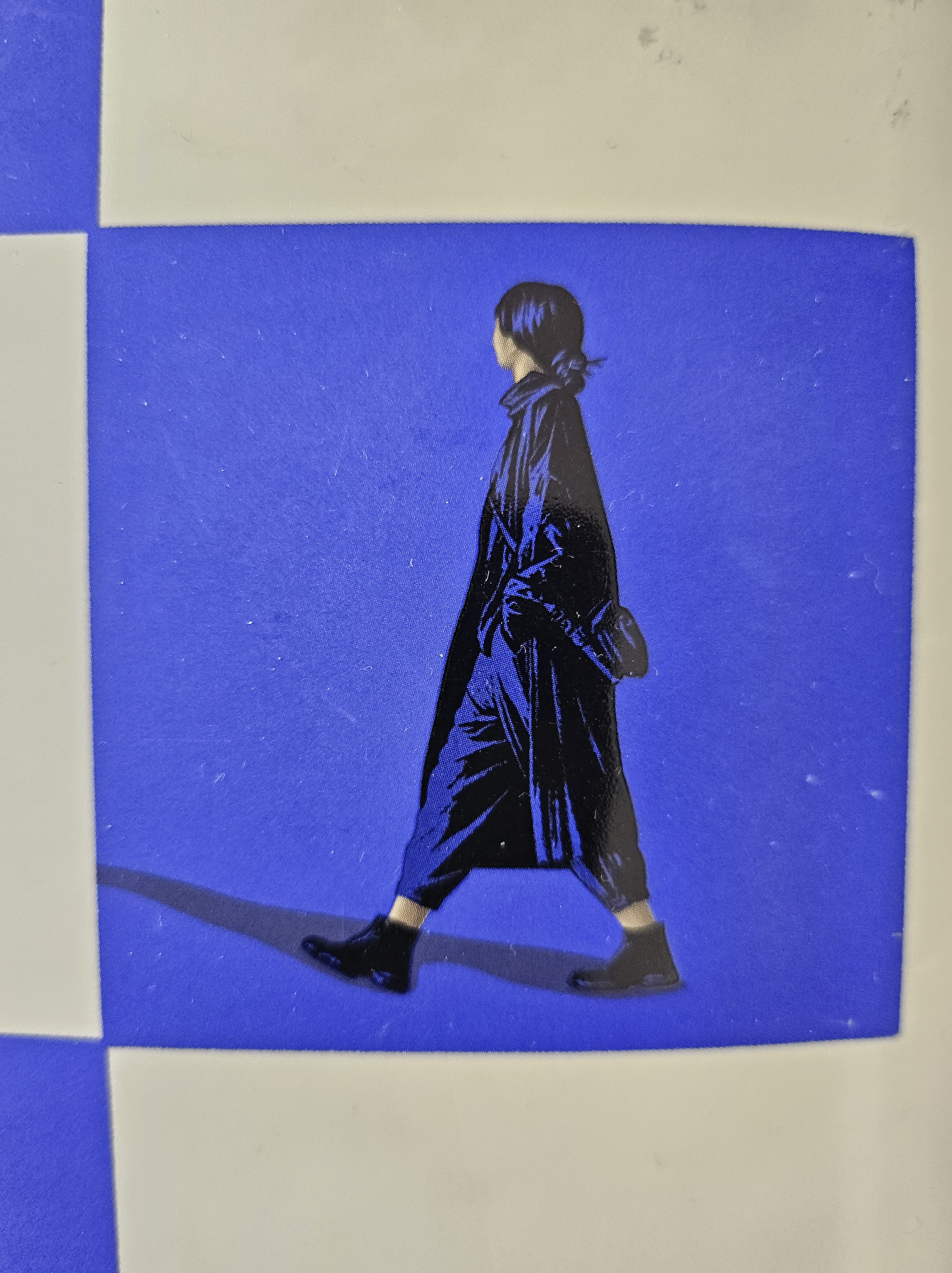
You must go on, I can’t go on, I’ll go on: Review of Sally Rooney’s novel, Intermezzo

I’d last read Rooney at the start of the pandemic. But then I heard the author read an extract of her new novel, Intermezzo, on the New Yorker Fiction Podcast in the summer, (you can listen here), when two of the protagonists meet at a chess tournament, and I experienced something quite different. A thrilling moment, both tender and absurdist. Intermezzo already felt like a departure …

In this new work, Sally Rooney writes in a style not present in Normal People. It’s more reminiscent of a Samuel Beckett short story – terse and internalized, and like Beckett’s prose, it packs an emotional punch.

We sit inside the mind of Peter Koubek and sometimes too, the brain of his brother, Ivan. Peter, a barrister, calls the younger Ivan, a chess ‘genius.’ The latter finds his advocate older sibling ‘condescending.’ Sally Rooney moves these two pieces deftly across the plot of Intermezzo as they navigate the taking of a king – the loss of their father.

The desires of the three women in the book we meet mainly through their acts and words. Most skillfully drawn among the quintet of characters is Margaret, a person so sympathetic that her interaction with one of the two men towards the end of the novel felt like the kindest conversation I’d read or seen in years. 22 year old, Naomi, another player on the board, seemed less substantial, but perhaps this is part of her style.

Where Sally Rooney’s writing really flies is in her ability to capture the interplay of live action and a character’s stream of perception. We see fragments of the outer world: a door swinging open, the banter in a pub, and like shards of light on a cubist painting, these outer images are illuminated by the inner worlds of our five. And how rich with feeling these inner worlds. Such delicate humanity in Rooney’s prose.

There is complexity, too, in Peter’s relationship with his ex/not ex Sylvia which feels intriguing and real. Indeed, all of the relationships in the novel which start awkwardly – intentionally so, it seems – develop a rhythm that is captivating to follow, playing out in satisfying sequences, and punctuated by deep philosophical turns that never feel forced.

My favourite of these was a riff on the thinker, Susan Sontag’s aphorism:

‘In place of a hermeneutics we need an erotics of art’*

that Rooney made into:

‘We need an erotics of environmentalism’

(which frankly, as original thought goes, (in this writer’s opinion), sails quite close to the ‘genius’ she ascribes to her chess-playing protagonist!)

I could write at length about the lightness of Rooney’s painterly descriptions of Dublin that hint at enough of an outline for the city to be seen, or the way the author shifts her characters within and around their relationships making us both root for them and want to give them a sound talking to (!) when, (for example – again in the style of Samuel Beckett) – they fail to hear one another or themselves. But it might be better if you read Intermezzo for yourself.

During the pandemic, (like some others, I heard), I found books challenging to stick with. The period itself was bizarre enough, when the very atmosphere of the world seemed to infiltrate my consciousness pulling me away from the immersion of reading. The flicker of the phone screen, social media’s bitesized claims; trying to figure out what to do in a country whose wilderness was its usp (but whose police would no longer let us wander there), all acted on my ability to simply sit down and read.

One great thing the covid crisis brought to the fore, though, and which Rooney does so well in this novel too, is explode the myth that other people have it all figured out. In both scenarios we are given the chance to see the human mess behind closed doors and to soften towards each other all the better for it.

Intermezzo is the first novel I have read since covid that has captured me completely. Enough to put away my phone. To take time to savour its language. Enough to truly care.

The very last lines of the book are what brought the title of this blogpost to mind. Through the character of Peter, Rooney’s lines evoke the mid century author and dramatist, Samuel Beckett’s trademark resolve, through his tramps in Godot, and in The Unnamable when he writes:

‘You must go on, I can’t go on, I’ll go on’

The phrasing of the final line in Rooney’s novel mirrors these words – it is so Beckett, I was at first surprised that his name didn’t feature in Rooney’s afterword (which details other writers’ words or ideas she has drawn on for this novel). But so suffused is Beckett’s sensibility throughout Intermezzo that perhaps his mention would be superfluous; the thanking is in the honouring.

Grief has met me personally this year. Intermezzo, itself a work that handles loss, has been a warm hug, a friend who draws on the ‘genius’ of masters for their solace, an engaging confidante, fresh air.

In brief, I think it’s a masterpiece.
*From Susan Sontag’s essay, ‘Against Interpretation’ (1964)

I review crime novels, contemporary fiction and nonfiction. If you enjoyed this post feel free to get in touch via social media here , and you can follow this blog by going here and clicking on ‘Follow Muscat Tales.’  Or leave a comment below… 🙂

Writing the Unconscious: What happened after I finished Novel 1


We are constantly telling stories. The unconscious wants coherence.  And so we fill the spaces with narrative.

Beginning, middle, end.

I have to stop myself, sometimes. I catch the writer in me wanting a midpoint. A moment of dramatic reversal. 

A year ago, with the help of a wonderful developmental editor, I finished writing my first novel. I remember her asking me afterwards if I missed my characters. How I felt about all that work and then the moving on.

In all honesty it was a relief. The novel had started to feel like an albatross around my neck, preventing me from exploring other forms.

After I was done, I queried literary agents and came across tons of brilliant resources for querying writers,

like this video: 

and this blogpost

and this podcast.

I spoke to family and friends, I gathered my strength and sent out around 20 queries.

I waited.

But no one took the bait.

I did however receive some valuable feedback from one agency, the people who represent Damian Le Bas who wrote The Stopping Places *

My novel is set in modern (and 1960s) Spain with a cast of almost entirely Spanish characters. 

The agency said they’d enjoyed my writing but didn’t think they could sell this book to a UK audience. They asked me to send them the next one once it’s written. Two other UK agencies responded similarly.  (Gimme a sec, I felt like saying, I’ll just whip one I made earlier out from a drawer!)

So, I stopped waiting for agency replies and started experimenting with poetry and short fiction.

I enjoy the technical challenge of the short story. A person can tinker with them for days or weeks, sometimes getting stuck on a paragraph or sentence where nothing seems to work. But I’ve found that if I show up day after day – if I keep going – the story, eventually rights itself, like a ship heading back on course.

The waves of my subconscious are calmer when I write. As I start on novel 2, the bulk of the work seems to happen when I leave my desk. The body moves and the mind loosens its grip. Some problems are practical: How old are my characters? How do they speak? Chunks of imagery or dialogue present themselves when I’m out walking or in a downward-facing dog.

Short story writing has taught me to be tight about sentences but a novel first draft is an outpouring that I try to let spill as it will. Listening hard to my characters because if I plan too much, I might just quash their flow. (I like this resource from Lauren Sapala about not dampening ideas with too much preparation…)

I’ve set myself the goal of a messy first draft by Christmas. Readers of my blog, family and friends: please keep me accountable. 🙂

*(a memoir about growing up in the UK Gypsy community and the author’s revisiting of the ‘stopping places’ of his childhood. Incredible book! My stand-out read of the pandemic.)

…………………………………………………………………………………………………

Readers, writers, poets, actors, artists, what are you working on? Feel free to comment below…

If you enjoyed this post feel free to get in touch via Twitter here , and you can follow this blog by going here and clicking on ‘Follow Muscat Tales.’  

The Confessions of Frannie Langton : Book review

house 2

(SPOILER ALERT… Contains some references to plot)

It’s been more than 2 years since my last blogpost… Reader, where has the time flown?

I’ve been working on a novel and was planning to return to this page in the new year, but I must confess I missed the buzz of blogging…

A character from fiction grabbed my attention. It was Frannie, heroine of Sara Collins’ debut novel, The Confessions of Frannie Langton. 

A few weeks ago, as reviews filled the Twittersphere and The Confessions of Frannie Langton was ‘Book of the Month’, I was approached by a Waterstones bookseller saying he doesn’t usually read novels but…

‘Try this,’ he urged, holding the paperback pictured below.

I took his advice and bought it.

Frannie

The premise? A grand Victorian house in 19th century London, a young woman sent to work there from Jamaica, and the accusation of a crime, the double murder of her bosses, for which she may hang.

As she awaits her trial, Frannie gives an account of what actually happened before she was imprisoned. She hopes to set the record straight, taking us through a life spent resisting the servitude into which she was born.

At the centre of the intrigue is the love between the servant Frannie and her mistress, Marguerite, a French ‘eccentric’.

‘Knowing a person’s story, and how they tell it, and where the lies are in it, is part of love.’

And in each of their interactions, as in the rest of the novel, Frannie is determined to be treated as equal, in a household – and world – set on keeping her in her place. Her courage is the engine which keeps the pages of this mystery turning.

There are court testimonies by other dwellers of the house. Not just the masters but the staff too. We meet them in the kitchen and peek at the food that they prepare:

‘…the room was musty and dim, and still reeked of salt and old mutton fat. The cake made up for it. Golden and sweet, and no matter that I knew only too well how the sugar was made.’

Like the hit TV series Downton Abbey, exchanges between the servants are as central to the story as those of the family, but no cosy historical is this. Imagine characters, with grins and bones protruding, a little larger than life, and you get the idea. Much of The Confessions of Frannie Langton is decidedly gothic.

Frankenstein 2

We also see snippets of a journal written by Benham, one half of the murdered couple. This adds to our picture of Frannie, a forthright mix of bookishness and protest at her lot, an avid reader who even hides the pages of Candide into the seam of her dress so she may continue the story without being seen.

This devotion to literature gives Frannie the language of her oppressors, the tools with which to face them. It’s a wonderful surprise in this suspenseful novel to find that books are not just Frannie’s lifeline but her secret weapon, giving her the confidence to speak her mind, shocking those who would expect her ignorance, and compliance.

If you spend time writing anything lengthier than an email you’ll know that the mechanics of plot can be a challenge to get right. But Sara Collins has nailed it; the pacing of this novel is superb.

In one sense, it’s a classic ‘whodunnit’, but the language is so rich and the literary allusions detailed that another layer is added to what might have been a more generic mystery.

The descriptive passages too are evocative of a London we only usually meet, as modern readers, in the pages of a real Victorian novel (or perhaps a TV adaptation). Yet this book, published in the Spring of 2019, conveys life in the 1820s in exquisite detail.

There’s a sensuality to the prose which makes the voice of Frannie visceral and true.

‘If it was a crime, then I am guilty of it and I confess it here. But I just wanted to keep that book as close as I could get it to my skin. Not to remind myself happiness was still possible, but to remind myself that anger was.’

The novel entwines entertainment and message to extraordinary effect, standing face to face with England’s legacy of racialism without flinching. It enlightens the reader on the part played by pseudoscience to fuel the pro-slavery agenda of the English ruling class in the 19th century.

In another blogpost I explore the challenges writers may face when attempting to marry a thrilling story with a serious point. In The Confessions of Frannie Langton the plot is so deftly handled that Frannie’s righteous anger is made tangible through every twist of the tale. Line after line so well conceived, I must confess I drank this novel.

It brought not just the pleasure of a great yarn – the joy of another world to go to – but a strong social message in the tradition of Charles Dickens.

Frannie Langton’s struggle against appalling cultural forces is made memorable through her bold, unforgettable voice, and the gothic imagery which abounds, shining a light on the ugliness of racial injustice while leading us through the most entertaining – and educational – of confessions.

…………………………………..

The Confessions of Frannie Langton is published by Penguin, available to purchase at all good book shops.

This blog recommends pairing this book with A True Story Based on Lies by Mexican-American author Jennifer Clement, which addresses class discrimination and female servitude in contemporary Mexico.

I review books I’ve loved. All views expressed in my posts are my own. This blog is not affiliated to any other individual, company or advertisement. If you’d like to get in touch, please visit my contact page, here.

Your comments as always are welcome…

Developing Voice: How a singing teacher coached me into writing

bird

Yesterday I clicked on a Twitter post without reading the intro. I saw ‘Writing’ and ‘Advice’ and thought: This one’s for me. I must have been two paragraphs in when I realised I’d read this writer’s work before.

I glanced at his name and yes, I was reading the Internet’s Chuck Wendig. Instantly recognisable, his style mixes zany metaphors with random phrases. Like some kind of surrealist stand-up, it all feels crazy and at the same time serious and to the point.  If you want to get a sense of Wendig’s work, you can read his writing advice here.

One of the reasons I think his prose is popular is that he has mastered Voice. And Voice is one of those elusive things like Grace or the joy of two drops of rain in Muscat that almost defies description.

One Cambridge winter, before I’d started to sit down regularly to write, I saw an advert for a small adult choir based in one of the colleges. I was excited, a little apprehensive and went to the audition to sing my piece.

My hands fluttered as I battled through my chosen tune, trying to project my voice, only having sung for fun, I felt unsure of what I was doing.

You sang quite nicely,’ said the choir director,  ‘But I could hardly hear you. Work with me and you’ll be fit for the choir in no time.’

For the following few weeks she gave me terrifying private lessons. She taught me like the opera singer that she was, correcting my posture, the shape of my mouth, my pronunciation, stopping the piano and starting again, giving me homeworks of repeated trills which I feared might alienate my housemates forever.

But by the end of the month something had shifted. I didn’t join the choir although I had learnt a few skills, and I didn’t continue with the teacher. What changed is that I no longer felt afraid to sing in front of others.

When I consider written Voice, I think, of this. The willingness to show who you are.

It comes through in the words we choose, how we order sentences, the topics we want to explore, our humour, the rhythm of our prose and like singing, we can only control the sound we make up to a point. Half of it is in the ear of the reader.

Even if I disagree with him and Stephen King about adverbs (another blog post entirely), I think people like to read Chuck Wendig because he is being who he is without apology and that comes through in his Voice.  Becoming acquainted with, practising, and enjoying one’s own writing voice fulfills an important function for the reader.

When I lived in Greece, I shared an apartment with a couple. One evening they invited a friend over. I sat with them but my limited Greek made conversation difficult. The friend had a beautiful speaking voice. The kind of voice you can sit and listen to and never get tired, like the rush of bird’s wings when they take off all at once. I kept thinking, I’ll go back to my part of the apartment soon but I kept stalling and it was 1am by the time I retired to my room.

A well-modulated voice is pleasing to the ear. It’s much easier to capture what a person is trying to say when the tone is regular, the diction coherent.

Most writers I speak to have something burning to convey in their work. When I first started writing my novel in 2015, I too had an idea for a story but my message was weak. It’s only as I figured out the themes behind the action -what mattered to me most -that I felt able to start working on a suitable voice for my novel.

Voice grows as we use it, shedding the fear again and again that how we come across is somehow not okay. Too this, or not enough that.

And it’s vital in allowing us to convey the thing we want to say.

When I think of my favourite novels, Toni Morrison’s Beloved, Junot Diaz’s The Brief Wondrous Life of Oscar Wao, Disgrace by J.M Coetzee, they are filled with great stories and memorable characters but without a carrying voice in each of these, I would not have got past page one.

Advice-givers often tell writers to ‘fake it till you make it’; ‘if you haven’t found your own voice, just copy another writer’. Reading widely is undoubtedly a good idea but if we look outside ourselves for who we are, we’re liable to focus so hard on another’s melody we end up writing out of tune.

That evening in Greece, the thing I enjoyed about the way our visitor spoke is that it was unique. I had never heard another person sound like this. Speaking from our authentic selves is powerful because it gives everyone else permission to do the same. The writer who is centred in voice is trusting us with who they are. Without copying or hiding or feigning.

Voice takes practice, reading aloud if that’s your thing, confidence that the energy coming from  inside is more real than what others think about it. This is the paradox, for the closer we get to expressing our truth, the more it resonates with others. And the beautiful thing about writing is that no one needs to hear it till you’re ready.

If we imagine a conversation with someone we know, how do we know when they’re being truthful, genuine, real? What are the ways in which they speak which make us want to listen?  Or ‘read on’? My guess is that the answer to all of these is when our friends or writers or any folk are being most themselves.

If we listen hard enough we will hear this unmistakably in their voice.

Dear readers, I’m going to be giving this blog a rest for a few weeks while I do an editing job on draft two of my novel. In the meantime, feel free to get in touch via Twitter here , and you can follow this blog by going here and clicking on ‘Follow Muscat Tales.’  That way you’ll be notified when the blog’s up and running again 🙂

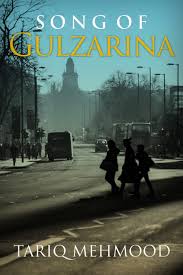
Speaking in bombs: Book Review – Song of Gulzarina by Tariq Mehmood

manc

After three years of studying (yeah right) at Manchester Uni I decided to stay on another year. I couldn’t get enough of the Northern drizzle: gobs of fumey water threatening to turn everything grey. Sometimes the sun would appear and a bright blue blanket would cover the city, lighting up the red brick of the warehouses.

I arrived in 1996 when a bomb planted by the IRA had gutted the central Arndale Centre. Terrorism in England in the twentieth century was all about bins in railway stations, bombs in Wimpy Bars, the targeting of political buildings. Scary, yes, but somehow in parallel with normal life. Not at its centre.

Manchester is the setting of Tariq Mehmood’s recently published novel, Song Of Gulzarina, an absorbing read which travels between the North West of England and Pakistan, along with the main character, Saleem Khan.

The story picks up pace at a mill, in an incident involving unsuitable toilets at Saleem Khan’s workplace. The Pakistani workers request sanitary facilities. The white British manager, Mr Andersen abuses the men:

‘You filthy Paki bastards always sticking together.’ Mr Anderson picked up another pipe and hit Salamat Ali Teka across the face.

This racist violence paves the way for Saleem Khan’s journey through pain, into war, loss and eventual expatriation.

Love features too, in this novel, as Saleem falls for Carol Anderson, the daughter of his boss. One of the most enjoyable parts of the book is the way the writer has his characters speak. As Carol and Saleem chat, she responds to Saleem by speaking to an invisible onlooker:

‘How did you find out?’

‘How did I find out, he says,’ she said leaning back into the setee.

Her turn of phrase is real and affecting, betraying something deeper than its outward flippancy. In fact I was originally drawn to review this book after Tariq Mehmood’s humour showed up on a mutual facebook friend’s page. Mehmood has a gift for pithy – often witty – dialogue switching between registers with pitch- perfect precision.

A few years ago I attended a workshop on writing dialogue at the Winchester Writers’ Festival. The take-away was that speech in literature is artificial but you have to make it sound plausible; each character should appear authentic and different (try it – it’s not an easy task!) Tariq Mehmood gives his characters language which is earthy, often coarse and angry and it makes his characters visceral, believable.

The sense of place in Song Of Gulzarina looms large. Not just in Manchester where:

The white pigeon with a black circle around its left eye is now perched on top of one of the toll gates, oblivious to the cold Mancunian wind.

but also in Pakistan where the depth and sensuality of the detail reminded me of Aravind Adiga’s descriptions of Bangalore in The White Tiger:

‘Other than the smoke from the exhaust of a rickshaw, nothing hit us.’

kite

——-SPOILER ALERT——-

The final section of the book – please look away if you don’t want a SPOILER – takes the character of Saleem Khan to a darker place:

If the book begins with racist humiliation, it ends in exile. The distancing of our hero from his own humanity, hell-bent on revenge, his heart closed and life little more than an alcoholic blur.

Ravaged by multiple losses: his wife, girlfriend, cousin, and the disdain of his daughter, Khan’s heartbreak has turned its face upon the world. He plans to avenge his disillusionment on the British ex Prime Minister, Tony Blair who has come to Manchester to speak. Strapped to Khan’s body are enough explosives to take out far more than the former PM.

In this last section, the reader is kept on tenterhooks as Khan wanders around Longsight and Wilmslow Road in this state ready to activate the mobile phone at any moment.

That our protagonist chooses Tony Blair as his target is unsurprising. There is a terrible irony that much of the IRA terrorism mentioned above was curtailed by an agreement in 1998 of which Blair played a significant part. Five years later, the invasion of Iraq and all of its rhetoric served not only an illegal war but a media machine which placed people like Saleem Khan in a cold and terrifying place.

Cast out by a British government acting with unspeakable hypocrisy, it is easy to understand why Fight or Flight became, for some, a way of life.  Add in the United States response in Afghanistan to the 9/11 attacks, and terrorism becomes a very real language. ‘We are here,’ cry the suicide bombers. ‘You thought you could ignore us. But: ‘Look at me. I’m the captain now.’*

That Khan’s decision to blow himself up is not associated with his religious beliefs but a quest for social justice is significant. In fact he declares himself an Atheist, his faith has long since died. “Never contend with a man who has nothing to lose.” wrote Baltasar Gracian in the 17th century. Saleem Khan’s self-rejection is so complete, hope so long-gone that he will go to any lengths. His radicalisation has come not from pious rhetoric, but from the sense that nothing will be lost when he kills and dies.

song-of-g

For this is a novel about alienation, about looking for home and finding only estrangement. From the woman who treats Khan at Manchester Royal Infirmary and comments with horror at the amount of hair on his body, to his close white friend who runs away as they watch the events of 9/11 unfold on the telly; Saleem Khan is left without sanctuary.

Mehmood skilfully navigates the nuances of Islam in the West. When Khan’s daughter Aisha is aggressed by men in a passing car, the Muslim youths outside the mosque stand impassively. Khan chastises them:

‘How can you just carry on selling books?’ I ask the bearded youth, pointing a shaking finger. ‘You saw what they did to your sisters.’

The youth replies that all will be taken care of in the Hereafter – a view which ignores traditional Islamic belief (which highlights the importance of balancing both Earthly matters and a spiritual focus on the next life) – and instead of helping his Muslim sister, uses fundamentalist religious rhetoric to do nothing.

Towards the end of the book, Khan remembers seeing a snake as a child and playing with it until he was urgently warned to move away. As he walks, in the present tense, through Rusholme with explosives attached to his chest, he recalls his mother telling him of how casually he toyed with the serpent. The adults were afraid of the creature because they had experience but the child was safe in his innocence. Nothing had caused him to prejudge it, to antagonise it, and the snake did not attack.

Tariq Mehmood has written a powerful tale and his voice in the current political climate is important. Through a strong sense of the spoken word, an under-heard narrative gains momentum. This book is pure entertainment but it is also a cautionary tale. A question embedded in a Song. What happens when people are ignored and suppressed for too long? Where does that energy go? It is the reader’s gain that this author has used his considerable skill to create the compelling novel: Song for Gulzarina.

For more information about the book click here

Header photograph from the book Manchester, England (by Dave Haslam), by Aidan O’Rourke (www.aidan.co.uk)

*Words of the sea pirates in the film, Captain Phillips (2013)