Muscat Tales is moving (& changing name!)

Dear reader,

After almost a decade of writing this blog, and having now left Muscat, I am shifting these Tales to a new space. You’ll still find the old content on here but from now, you can find my writing at:

From the Lighthouse – spotlighting literary currents

If you are a subscriber to this blog (Muscat Tales), you will receive an invitation to my new writing platform (From the Lighthouse – Spotlighting literary currents )

If you haven’t yet subscribed to my blog, feel free to subscribe over there; I’d love to keep sharing my posts where I review books, and reflect on current cultural contexts and their impact on stories. There might even be a bit of life writing there too.

Here’s the link to sign up if you’d like to receive fresh-pressed pieces into your inbox: (note – it’s free (unless you’d like to pledge :)) – just choose No pledge and then Continue without pledging (see image below) to receive my posts whenever I write them.

Subscribe here: https://josephinerose1.substack.com/subscribe?params=%5Bobject%20Object%5D

Thank you for reading, my OG subscribers to Muscat Tales – or if you were just floating by and found your way here, you are most welcome on my new substack!

Ma’a salaama.

Josephine Rose

You must go on, I can’t go on, I’ll go on: Review of Sally Rooney’s novel, Intermezzo

I’d last read Rooney at the start of the pandemic. But then I heard the author read an extract of her new novel, Intermezzo, on the New Yorker Fiction Podcast in the summer, (you can listen here), when two of the protagonists meet at a chess tournament, and I experienced something quite different. A thrilling moment, both tender and absurdist. Intermezzo already felt like a departure …

In this new work, Sally Rooney writes in a style not present in Normal People. It’s more reminiscent of a Samuel Beckett short story – terse and internalized, and like Beckett’s prose, it packs an emotional punch.

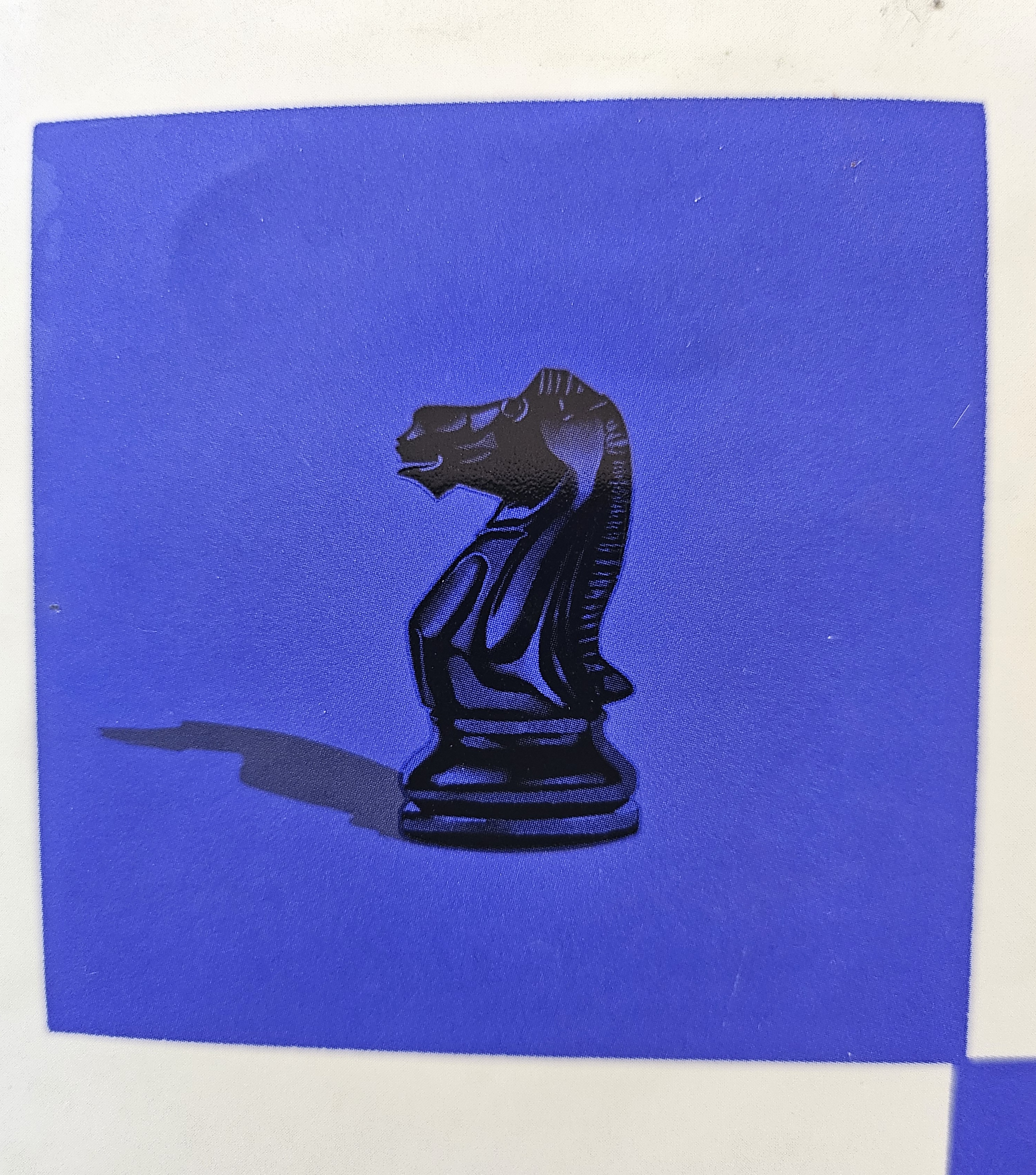
We sit inside the mind of Peter Koubek and sometimes too, the brain of his brother, Ivan. Peter, a barrister, calls the younger Ivan, a chess ‘genius.’ The latter finds his advocate older sibling ‘condescending.’ Sally Rooney moves these two pieces deftly across the plot of Intermezzo as they navigate the taking of a king – the loss of their father.

The desires of the three women in the book we meet mainly through their acts and words. Most skillfully drawn among the quintet of characters is Margaret, a person so sympathetic that her interaction with one of the two men towards the end of the novel felt like the kindest conversation I’d read or seen in years. 22 year old, Naomi, another player on the board, seemed less substantial, but perhaps this is part of her style.

Where Sally Rooney’s writing really flies is in her ability to capture the interplay of live action and a character’s stream of perception. We see fragments of the outer world: a door swinging open, the banter in a pub, and like shards of light on a cubist painting, these outer images are illuminated by the inner worlds of our five. And how rich with feeling these inner worlds. Such delicate humanity in Rooney’s prose.

There is complexity, too, in Peter’s relationship with his ex/not ex Sylvia which feels intriguing and real. Indeed, all of the relationships in the novel which start awkwardly – intentionally so, it seems – develop a rhythm that is captivating to follow, playing out in satisfying sequences, and punctuated by deep philosophical turns that never feel forced.

My favourite of these was a riff on the thinker, Susan Sontag’s aphorism:

‘In place of a hermeneutics we need an erotics of art’*

that Rooney made into:

‘We need an erotics of environmentalism’

(which frankly, as original thought goes, (in this writer’s opinion), sails quite close to the ‘genius’ she ascribes to her chess-playing protagonist!)

I could write at length about the lightness of Rooney’s painterly descriptions of Dublin that hint at enough of an outline for the city to be seen, or the way the author shifts her characters within and around their relationships making us both root for them and want to give them a sound talking to (!) when, (for example – again in the style of Samuel Beckett) – they fail to hear one another or themselves. But it might be better if you read Intermezzo for yourself.

During the pandemic, (like some others, I heard), I found books challenging to stick with. The period itself was bizarre enough, when the very atmosphere of the world seemed to infiltrate my consciousness pulling me away from the immersion of reading. The flicker of the phone screen, social media’s bitesized claims; trying to figure out what to do in a country whose wilderness was its usp (but whose police would no longer let us wander there), all acted on my ability to simply sit down and read.

One great thing the covid crisis brought to the fore, though, and which Rooney does so well in this novel too, is explode the myth that other people have it all figured out. In both scenarios we are given the chance to see the human mess behind closed doors and to soften towards each other all the better for it.

Intermezzo is the first novel I have read since covid that has captured me completely. Enough to put away my phone. To take time to savour its language. Enough to truly care.

The very last lines of the book are what brought the title of this blogpost to mind. Through the character of Peter, Rooney’s lines evoke the mid century author and dramatist, Samuel Beckett’s trademark resolve, through his tramps in Godot, and in The Unnamable when he writes:

‘You must go on, I can’t go on, I’ll go on’

The phrasing of the final line in Rooney’s novel mirrors these words – it is so Beckett, I was at first surprised that his name didn’t feature in Rooney’s afterword (which details other writers’ words or ideas she has drawn on for this novel). But so suffused is Beckett’s sensibility throughout Intermezzo that perhaps his mention would be superfluous; the thanking is in the honouring.

Grief has met me personally this year. Intermezzo, itself a work that handles loss, has been a warm hug, a friend who draws on the ‘genius’ of masters for their solace, an engaging confidante, fresh air.

In brief, I think it’s a masterpiece.

*From Susan Sontag’s essay, ‘Against Interpretation’ (1964)

I review crime novels, contemporary fiction and nonfiction. If you enjoyed this post feel free to get in touch via social media here , and you can follow this blog by going here and clicking on ‘Follow Muscat Tales.’  Or leave a comment below… 🙂

Tokyo Taro at Al Falaj Hotel: restaurant review

tt-2-2

Forty years ago when Muscat was transitioning from rocky territory to modern city, a hotel was built in the East of the city – in Ruwi – the height of modernity in the early eighties.

Before the great chains dotted themselves around the capital, there was The Falaj Hotel. Named after the ancient canals which snake across the country, and the nearby Falaj Fortress, it had a grandeur seen only in India and the subcontinent, and was thus the place of choice for business people and travellers at leisure.

Wander in to its lobby today and the ancient air of the Arabian peninsula comes wafting through. Dhow ships of wood sit below seventies style lighting, the lobby is large, its odour of burning perfumed stones, (the local ‘luban’ – frankincense), unique as a signature.

The restaurant we are looking for is located on the 8th floor, in an unassuming room which has been there since the hotel began.

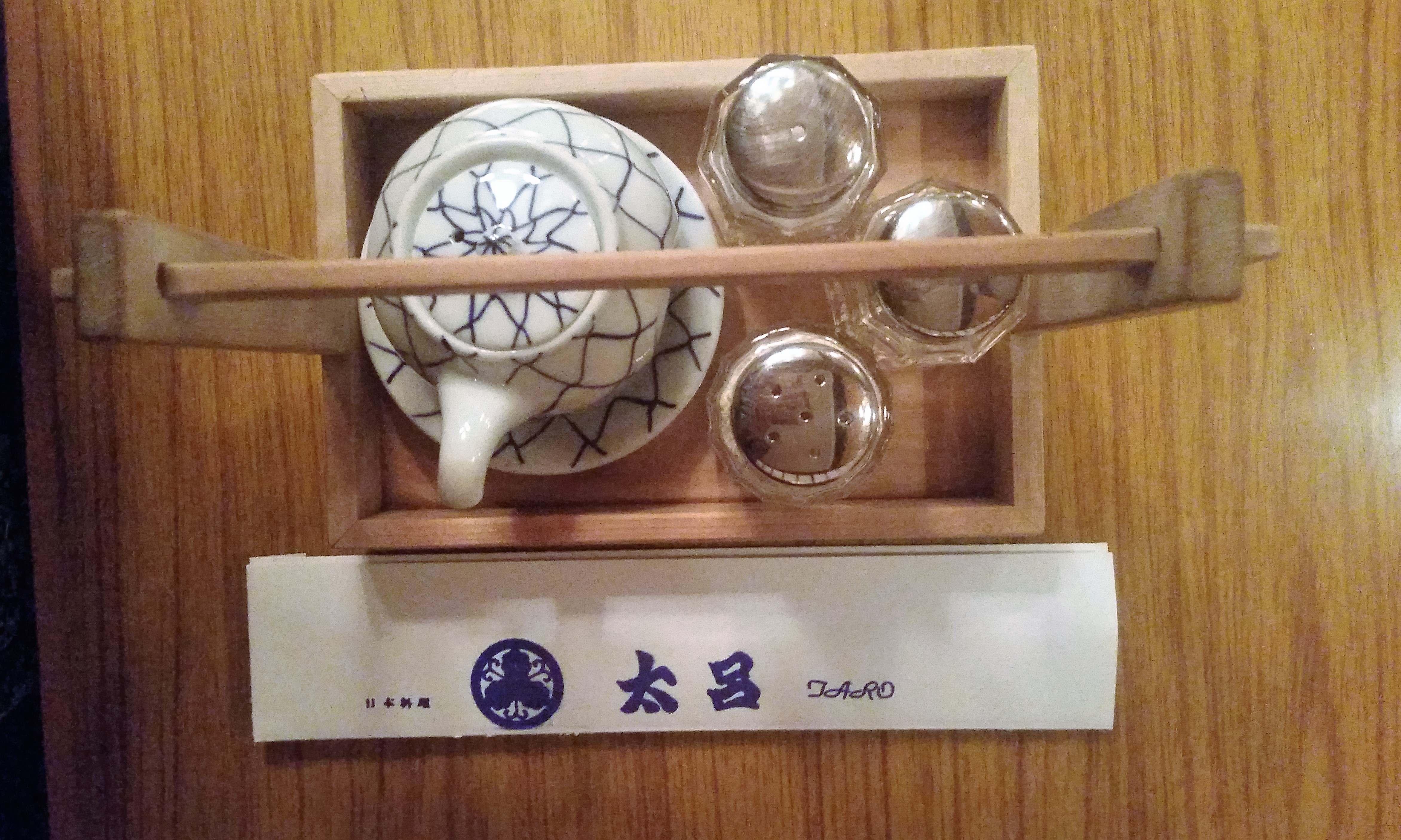
Its interior is simple: seventies-style structured lampshades overlook canteen style booths. Tables are divided by a noughts and crosses wooden lattice. Each setting is furnished with a tiny jug of soya sauce and condiments.

tt6

Until very recently Tokyo Taro was frequented weekly by large groups from Muscat’s Japanese business community and it’s easy to see why.

Even eating gluten-free, there is plenty to choose from. The avocado maki rolls are soft, rice fluffy; biting into one is a dream. The teppan-yaki chef cooks exactly to order and I am left wondering how stir frying vegetables on a hot plate can produce a dish so tasty. The accompanying sesame and cashew sauce (instead of wheat- containing soy sauce) works well with it too.

Our waiter, Felrom, accommodates our many questions, serving my companions fresh, fluffy tempura along with a Spinach and vinegared cucumber salad. Sashimi, mixed sushi, grilled dishes are all prepared with the same high level of care. Portions are generous and for a mid-range restaurant (60 OMR for 4 people) we are left with a lovely choice of leftovers.

tt4

While the city of Muscat has challenged olde world Hotels like The Falaj with a proliferation of world class places to stay (Muscat barely does mid range, let alone budget accommodation) Tokyo Taro remains, four decades on.

Yet the whole place feels like it’s already seen its golden age. Visiting the ladies, I leave the dining area and climb some back stairs. The walls and floor are painted institution blue, there are steel caps on each stair, a strange sparseness to the decor as though I have wandered via time-machine into a Victorian school. People with disabilities, wanting to access the facilities would not be well served by the lack of lift to the 9th floor.

The business folk who used to visit each week have long since stopped coming to Tokyo Taro, the waiters say. Though the food remains, apparently, as good as it always has, there is the sense that something needs to happen to reinstate the restaurant’s popularity. I, for one, would be pleased to return as regularly as required to help in this tasty diner’s comeback.

tt3-2

Tokyo Taro at the Falaj Hotel, Ruwi, Muscat : Phone : (968)24702311 Email : reservation@alfalajhotel.com Website: http://www.alfalajhotel.com/muscat-restaurants/tokyo-taro-restaurant.html

All books, restaurants, events featured in this blog are chosen out of personal interest. No financial or other reimbursement is offered to me by the proprietors, authors or organisers.

Speaking in bombs: Book Review – Song of Gulzarina by Tariq Mehmood

manc

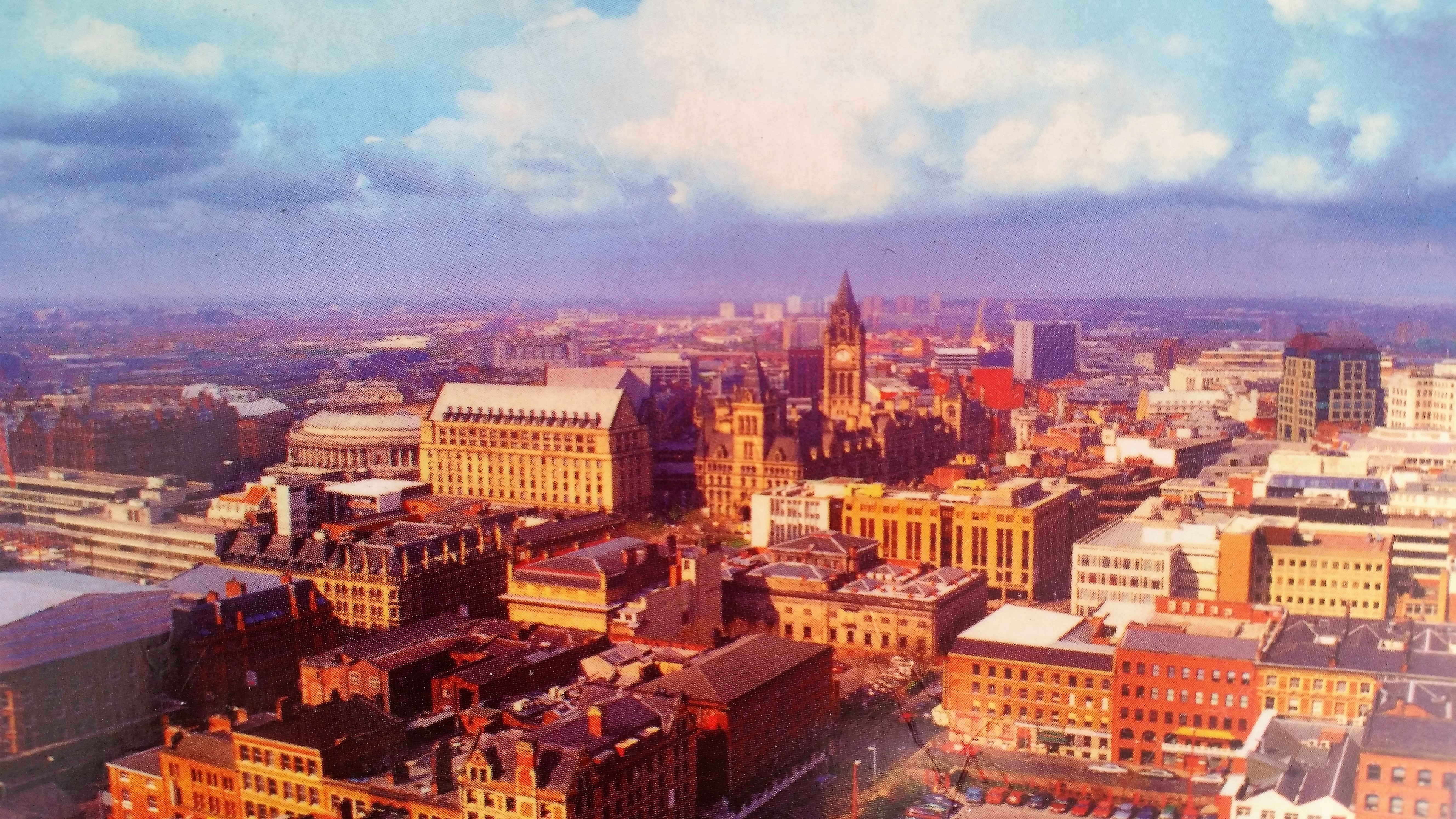
After three years of studying (yeah right) at Manchester Uni I decided to stay on another year. I couldn’t get enough of the Northern drizzle: gobs of fumey water threatening to turn everything grey. Sometimes the sun would appear and a bright blue blanket would cover the city, lighting up the red brick of the warehouses.

I arrived in 1996 when a bomb planted by the IRA had gutted the central Arndale Centre. Terrorism in England in the twentieth century was all about bins in railway stations, bombs in Wimpy Bars, the targeting of political buildings. Scary, yes, but somehow in parallel with normal life. Not at its centre.

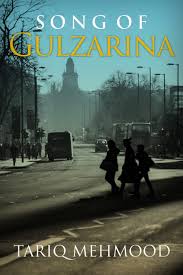
Manchester is the setting of Tariq Mehmood’s recently published novel, Song Of Gulzarina, an absorbing read which travels between the North West of England and Pakistan, along with the main character, Saleem Khan.

The story picks up pace at a mill, in an incident involving unsuitable toilets at Saleem Khan’s workplace. The Pakistani workers request sanitary facilities. The white British manager, Mr Andersen abuses the men:

‘You filthy Paki bastards always sticking together.’ Mr Anderson picked up another pipe and hit Salamat Ali Teka across the face.

This racist violence paves the way for Saleem Khan’s journey through pain, into war, loss and eventual expatriation.

Love features too, in this novel, as Saleem falls for Carol Anderson, the daughter of his boss. One of the most enjoyable parts of the book is the way the writer has his characters speak. As Carol and Saleem chat, she responds to Saleem by speaking to an invisible onlooker:

‘How did you find out?’

‘How did I find out, he says,’ she said leaning back into the setee.

Her turn of phrase is real and affecting, betraying something deeper than its outward flippancy. In fact I was originally drawn to review this book after Tariq Mehmood’s humour showed up on a mutual facebook friend’s page. Mehmood has a gift for pithy – often witty – dialogue switching between registers with pitch- perfect precision.

A few years ago I attended a workshop on writing dialogue at the Winchester Writers’ Festival. The take-away was that speech in literature is artificial but you have to make it sound plausible; each character should appear authentic and different (try it – it’s not an easy task!) Tariq Mehmood gives his characters language which is earthy, often coarse and angry and it makes his characters visceral, believable.

The sense of place in Song Of Gulzarina looms large. Not just in Manchester where:

The white pigeon with a black circle around its left eye is now perched on top of one of the toll gates, oblivious to the cold Mancunian wind.

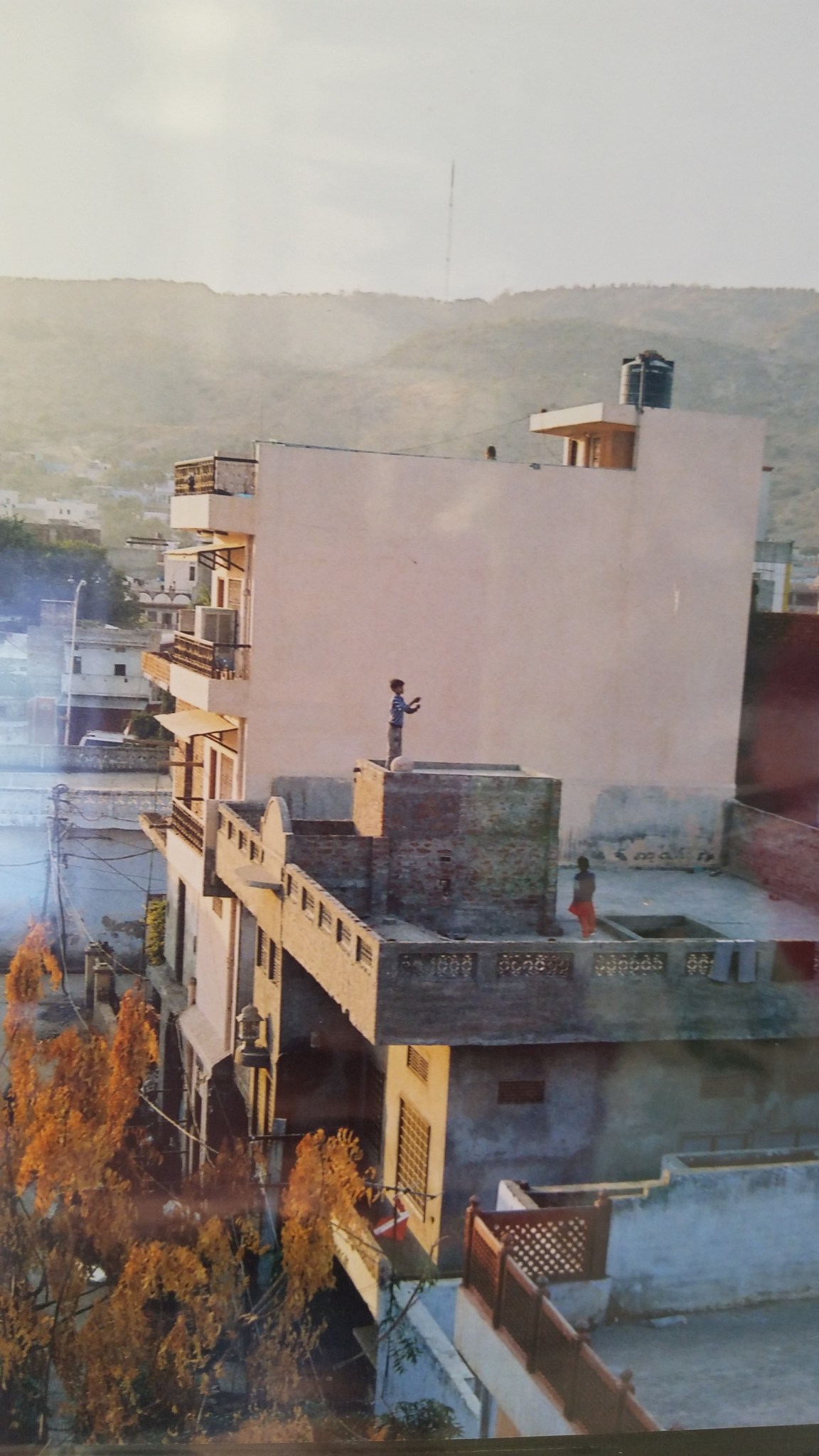
but also in Pakistan where the depth and sensuality of the detail reminded me of Aravind Adiga’s descriptions of Bangalore in The White Tiger:

‘Other than the smoke from the exhaust of a rickshaw, nothing hit us.’
kite

——-SPOILER ALERT——-

The final section of the book – please look away if you don’t want a SPOILER – takes the character of Saleem Khan to a darker place:

If the book begins with racist humiliation, it ends in exile. The distancing of our hero from his own humanity, hell-bent on revenge, his heart closed and life little more than an alcoholic blur.

Ravaged by multiple losses: his wife, girlfriend, cousin, and the disdain of his daughter, Khan’s heartbreak has turned its face upon the world. He plans to avenge his disillusionment on the British ex Prime Minister, Tony Blair who has come to Manchester to speak. Strapped to Khan’s body are enough explosives to take out far more than the former PM.

In this last section, the reader is kept on tenterhooks as Khan wanders around Longsight and Wilmslow Road in this state ready to activate the mobile phone at any moment.

That our protagonist chooses Tony Blair as his target is unsurprising. There is a terrible irony that much of the IRA terrorism mentioned above was curtailed by an agreement in 1998 of which Blair played a significant part. Five years later, the invasion of Iraq and all of its rhetoric served not only an illegal war but a media machine which placed people like Saleem Khan in a cold and terrifying place.

Cast out by a British government acting with unspeakable hypocrisy, it is easy to understand why Fight or Flight became, for some, a way of life.  Add in the United States response in Afghanistan to the 9/11 attacks, and terrorism becomes a very real language. ‘We are here,’ cry the suicide bombers. ‘You thought you could ignore us. But: ‘Look at me. I’m the captain now.’*

That Khan’s decision to blow himself up is not associated with his religious beliefs but a quest for social justice is significant. In fact he declares himself an Atheist, his faith has long since died. “Never contend with a man who has nothing to lose.” wrote Baltasar Gracian in the 17th century. Saleem Khan’s self-rejection is so complete, hope so long-gone that he will go to any lengths. His radicalisation has come not from pious rhetoric, but from the sense that nothing will be lost when he kills and dies.
song-of-g

For this is a novel about alienation, about looking for home and finding only estrangement. From the woman who treats Khan at Manchester Royal Infirmary and comments with horror at the amount of hair on his body, to his close white friend who runs away as they watch the events of 9/11 unfold on the telly; Saleem Khan is left without sanctuary.

Mehmood skilfully navigates the nuances of Islam in the West. When Khan’s daughter Aisha is aggressed by men in a passing car, the Muslim youths outside the mosque stand impassively. Khan chastises them:

‘How can you just carry on selling books?’ I ask the bearded youth, pointing a shaking finger. ‘You saw what they did to your sisters.’

The youth replies that all will be taken care of in the Hereafter – a view which ignores traditional Islamic belief (which highlights the importance of balancing both Earthly matters and a spiritual focus on the next life) – and instead of helping his Muslim sister, uses fundamentalist religious rhetoric to do nothing.

Towards the end of the book, Khan remembers seeing a snake as a child and playing with it until he was urgently warned to move away. As he walks, in the present tense, through Rusholme with explosives attached to his chest, he recalls his mother telling him of how casually he toyed with the serpent. The adults were afraid of the creature because they had experience but the child was safe in his innocence. Nothing had caused him to prejudge it, to antagonise it, and the snake did not attack.

Tariq Mehmood has written a powerful tale and his voice in the current political climate is important. Through a strong sense of the spoken word, an under-heard narrative gains momentum. This book is pure entertainment but it is also a cautionary tale. A question embedded in a Song. What happens when people are ignored and suppressed for too long? Where does that energy go? It is the reader’s gain that this author has used his considerable skill to create the compelling novel: Song for Gulzarina.

For more information about the book click here

Header photograph from the book Manchester, England (by Dave Haslam), by Aidan O’Rourke (www.aidan.co.uk)

*Words of the sea pirates in the film, Captain Phillips (2013)